Top 7 advantages of software compliance for small businesses
Running a small business without proper software licenses is like driving without insurance. You might be fine for a while, but one audit, one lawsuit, or one data breach can wipe out years of hard work. Software compliance provides legal protection by helping you avoid fines, lawsuits, and vendor audits. This article breaks down the seven most powerful advantages of software compliance, from protecting your bottom line to unlocking new growth opportunities that most SMB owners never even consider.
Table of Contents
- Legal protection and risk reduction
- Operational efficiency and streamlined processes
- Significant cost savings and resource optimization
- Stronger security posture and fewer vulnerabilities
- Boosted reputation and business growth opportunities
- Compliance as a competitive advantage
- Get started with reliable compliance solutions
- Frequently asked questions
Key Takeaways
| Point | Details |
|---|---|
| Legal protection | Software compliance reduces lawsuits and fines for your business. |
| Improved efficiency | Automated compliance processes streamline IT operations and save time. |
| Cost reduction | Cut software waste and negotiate better deals with full compliance. |
| Enhanced security | Stay ahead of threats by keeping software patched and authorized. |
| Business growth | Gain trust, win bigger contracts, and open up new markets with compliance. |
Legal protection and risk reduction
Software compliance is your first line of defense against expensive legal trouble. When you use unlicensed or improperly licensed software, you open the door to vendor audits, government fines, and civil lawsuits. These are not theoretical risks. They happen to small businesses every year, and the financial damage can be severe.
Here is what non-compliance can cost you:
- Vendor audits that freeze operations for weeks while your team scrambles to produce documentation
- True-up fees that can exceed $1M in penalties for larger deployments, with non-compliance losses reaching $500,000 even for smaller businesses
- Lawsuits from software publishers that result in settlements far exceeding the original license cost
- Reputational damage that follows a public compliance failure for years
- Business disruption when software is forcibly removed or disabled during an audit
For a deeper look at where Microsoft licensing risks hide, the Microsoft licensing risks guide covers the most common traps SMBs fall into. A solid software compliance guide can also help you build a baseline understanding of your obligations.
Statistic spotlight: Non-compliance losses can reach $500,000 in penalties for a single audit cycle. For most small businesses, that is not a recoverable hit.
Pro Tip: Schedule a quarterly license review. Even a two-hour internal check every three months can catch gaps before they become audit findings.
Reducing your legal exposure does more than protect you from fines. It frees up the mental bandwidth and financial resources you need to actually grow your business.
Operational efficiency and streamlined processes
Beyond legal risks, streamlined operations are a powerful hidden benefit of software compliance. When your software environment is organized and properly licensed, your IT team stops playing defense and starts playing offense.
Here is how compliance improves day-to-day operations:
- Automated tracking replaces manual spreadsheets. Automation eliminates manual tracking and gives IT staff real-time visibility into what is installed and where.
- Faster onboarding for new employees because software provisioning follows a documented, repeatable process.
- Fewer help desk tickets since licensed, updated software runs more reliably and generates fewer errors.
- Clearer IT roadmaps because your team knows exactly what tools are in use and when renewals are due.
- Reduced shadow IT where employees stop installing unauthorized apps because a proper, compliant toolkit is already in place.
The impact of unlicensed software on productivity is often underestimated. Crashes, compatibility issues, and missing updates all trace back to non-compliant software. Explore automation tools for compliance to see how modern platforms handle this for you.

Pro Tip: Use a Software Asset Management (SAM) tool to automate your license inventory. Even a basic SAM setup can save your IT team 5 to 10 hours per week on manual tracking tasks.
Significant cost savings and resource optimization
Operational efficiency directly drives the next advantage: boosting your profit and eliminating unnecessary software costs. Most business owners assume compliance costs money. The reality is that non-compliance costs far more.
| Cost factor | Without compliance | With compliance |
|---|---|---|
| Unused licenses | Paid but ignored | Identified and reallocated |
| Audit penalties | Up to $500,000 | Avoided entirely |
| SaaS waste | ~29% of spend wasted | Reduced through regular review |
| Vendor negotiation | Weak position | Leverage from accurate data |
| Budget predictability | Unpredictable spikes | Stable, planned renewals |
28% of enterprise software goes unused, and average SaaS waste sits at 29%, which translates to roughly $17M in wasted spend for larger organizations. Even at SMB scale, that waste adds up fast.
Here is where the savings come from:
- Right-sizing licenses so you only pay for what you actually use
- Consolidating overlapping tools that do the same job across different departments
- Negotiating better vendor terms when you walk into renewal discussions with accurate usage data
- Avoiding emergency purchases when an audit forces you to buy licenses at full price under pressure
The official software benefits page outlines how genuine licensing pays for itself. For a broader view, the license management benefits resource explains the ROI in practical terms.
Stronger security posture and fewer vulnerabilities
Financial savings are just part of the story. Security matters just as much for business continuity and trust. Unlicensed software is one of the most overlooked entry points for cyberattacks.
| Security factor | Licensed software | Unlicensed software |
|---|---|---|
| Security patches | Automatic and timely | Delayed or unavailable |
| Vendor support | Full access | None |
| Malware risk | Low | Significantly higher |
| Compliance with data laws | Supported | At risk |
| Audit trail | Clear | Missing |
Unlicensed software increases vulnerability exposure because it often cannot receive official updates, leaving known security holes open for attackers to exploit.
“The weakest link in most SMB security setups is not the firewall. It is the unpatched, unlicensed software running quietly in the background.”
Compliance ensures your software stack receives timely patches and stays aligned with current security standards. It also reduces shadow IT, where employees install unapproved apps that your IT team cannot monitor or secure. Review the secure software risks breakdown and use the security checklist to audit your current setup. For broader guidance, software security best practices from SonarSource covers the technical side in detail.
Boosted reputation and business growth opportunities
A strong security posture helps your brand. Now discover how compliance grows your business in ways that go beyond avoiding problems.
Compliance sends a clear signal to everyone your business interacts with. Customers trust you more. Suppliers see you as a reliable partner. Enterprise clients and government agencies require it before signing contracts.
Here is what a compliant reputation opens up:
- Government contracts that require vendors to demonstrate software and data compliance as a baseline condition
- Enterprise partnerships where procurement teams run compliance checks before approving new vendors
- Better insurance rates as cyber insurers increasingly factor software compliance into their risk assessments
- Stronger investor confidence since compliant businesses present lower operational and legal risk
- Customer loyalty from clients who know their data is handled by a business that takes its obligations seriously
“Compliance elevates business reputation and opens market opportunities that non-compliant businesses simply cannot access.”
The authenticity benefits page shows how genuine software directly supports your brand credibility. For mid-sized tech companies scaling up, the licensing compliance guide from PatentPC provides a practical roadmap.
Compliance as a competitive advantage
With these benefits in mind, here is how to set your business on the winning track with software compliance. Most of your competitors are still treating compliance as a checkbox. That is your opportunity.
“SMBs that approach compliance proactively increase efficiency and market access while their reactive competitors absorb penalties and missed opportunities.”
Compliance is not just about following rules. It is a business strategy. When your software environment is clean, documented, and current, you move faster. Onboarding takes days instead of weeks. Audits become routine instead of catastrophic. New partnerships happen because you can prove your standards.
Early adopters of compliance frameworks consistently outpace rivals who are stuck managing outdated or risky software stacks. Automated compliance platforms magnify this advantage for fast-growing IT teams by removing the manual burden entirely. The SMB compliance checklist gives you a practical starting point to build your compliance foundation today.
Pro Tip: Frame compliance as an investment pitch to your leadership team. Calculate the cost of one audit penalty versus the annual cost of a SAM tool. The math almost always favors proactive compliance by a wide margin.
Get started with reliable compliance solutions
Ready to experience these advantages? Making compliance simple starts with having the right tools and the right licenses in place from day one.
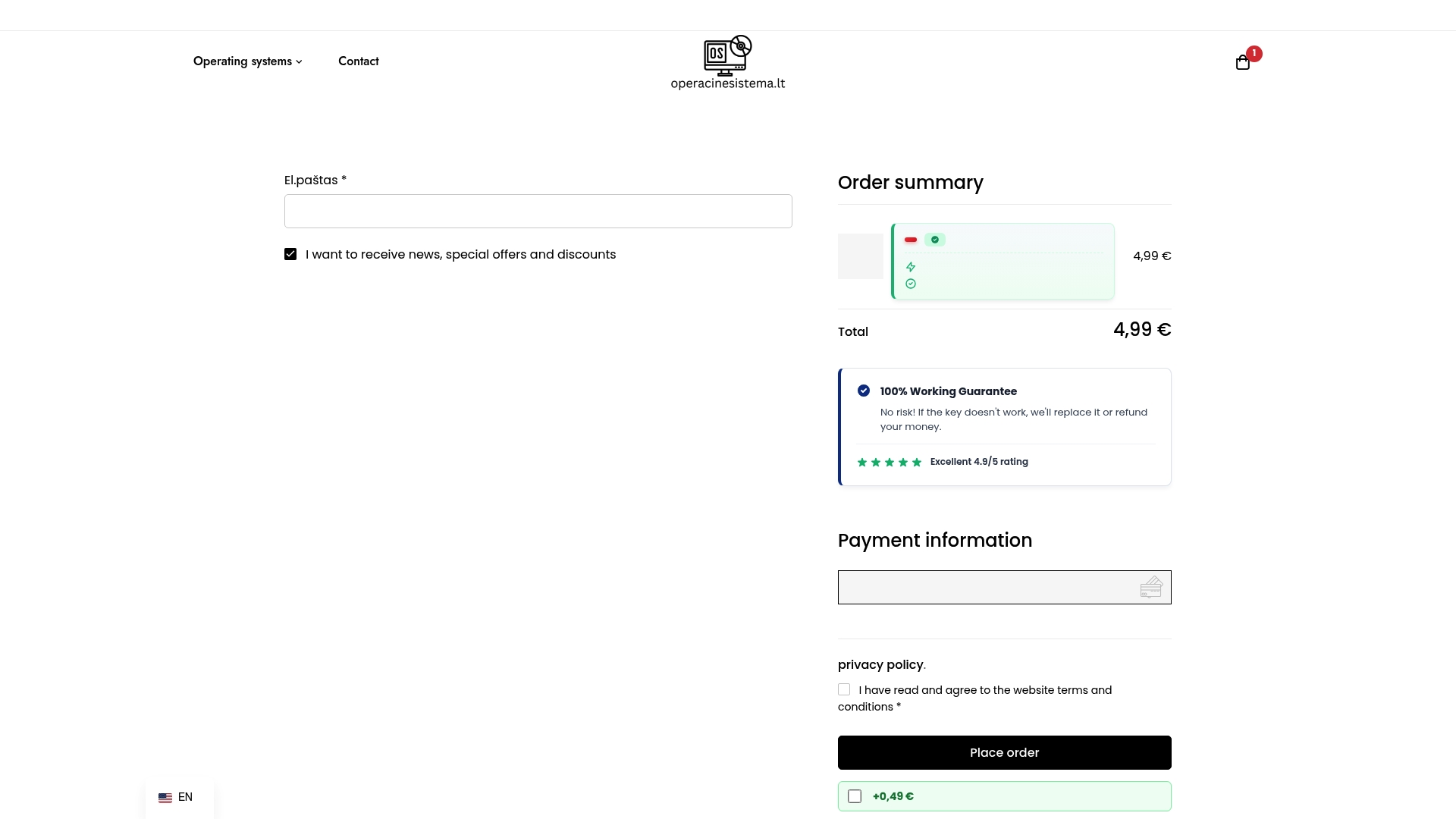
At operacinesistema.lt, we specialize in genuine Microsoft OS licenses that give your business a clean, legal, and secure software foundation. Start with the SMB compliance checklist to identify your current gaps, then explore the official software advantages to understand the full ROI of going legitimate. When you are ready to act, the Microsoft OS purchase checklist walks you through a secure, confident buying process. Compliance does not have to be complicated. It starts with one licensed product and a plan.
Frequently asked questions
What is software compliance in simple terms?
Software compliance means your business only uses software with valid licenses and follows the rules set by vendors and applicable laws. Think of it as making sure every tool you use is paid for and authorized.
How does software compliance save money?
It reveals unused licenses and cuts software waste, allowing smarter spending and fewer costly penalties. 28% of enterprise software goes unused, meaning most businesses are already paying for tools they do not need.
Are there easy tools to help manage software compliance?
Yes. Automated Software Asset Management tools track usage, licensing, and updates continuously. IT pros benefit from SAM tools that remove the need for manual spreadsheet tracking entirely.
Does compliance improve business reputation?
Compliance elevates reputation and signals to customers, partners, and enterprise clients that your business operates with integrity and meets professional standards.