Security Best Practices 2026: What IT Pros Must Know
Tóm tắt:
- Effective cybersecurity in 2026 requires prioritizing foundational controls like asset inventory, patch management, and identity protection, as attackers exploit unpatched vulnerabilities and stolen credentials at scale. Implementing frameworks such as CIS Controls IG1 and NIST CSF 2.0 ensures structured governance and risk oversight, especially emphasizing executive accountability and supply chain management. Maintaining genuine software licenses is essential to prevent vulnerabilities and enforce compliance, forming the bedrock of a resilient security program.
The security best practices 2026 demands are nothing like what you faced three years ago. Attackers now exploit unpatched vulnerabilities faster than most teams can respond, AI accelerates phishing and credential attacks, and regulators keep adding layers to an already complex compliance picture. If your security program is still built around perimeter defenses and annual audits, you are already behind. This article gives you a prioritized, practical breakdown of what actually moves the needle in 2026, covering foundational controls, patching discipline, governance frameworks, and identity management, so you can protect your organization without wasting time on low-impact fixes.
Mục lục
- Điểm chính
- 1. Security best practices 2026: start with CIS Controls v8.1 IG1
- 2. Prioritizing patch management to shrink your exposure window
- 3. Using NIST Cybersecurity Framework 2.0 for governance and risk
- 4. Strengthening identity and cloud controls for 2026 threats
- 5. Building a measurable, ongoing security program
- 6. Applying data protection strategies that hold up under scrutiny
- 7. Ensuring software authenticity as a baseline security control
- My take on what actually matters in 2026
- Secure your environment with genuine Windows licenses
- Câu hỏi thường gặp
Điểm chính
| Điểm | Chi tiết |
|---|---|
| CIS Controls IG1 is your baseline | Start with 56 essential safeguards covering asset inventory, access management, and account lifecycle. |
| Patch time is a risk metric | The median patch time is 43 days; automation and compensating controls cut exposure windows significantly. |
| NIST CSF 2.0 adds governance | The new Govern function ties cybersecurity directly to enterprise risk management and supply chain oversight. |
| Identity is the new perimeter | MFA and least-privilege access controls are the single most effective defense against credential-based attacks. |
| Genuine software matters | Running unlicensed or counterfeit software introduces unpatched vulnerabilities and compliance risk from day one. |
1. Security best practices 2026: start with CIS Controls v8.1 IG1
Before you touch advanced threat detection or zero-trust architecture, you need a solid foundation. CIS Controls v8.1 contains 18 controls and 153 measurable safeguards. Implementation Group 1 (IG1) pulls out the 56 most critical safeguards, the ones specifically designed to shut down the most common attack vectors.
These 56 safeguards focus on three areas: knowing what you own, controlling who can access it, and monitoring what is happening. For an IT team or a small business, that is the right place to start. Trying to implement all 153 at once leads to paralysis.
Here is what IG1 prioritizes:
- Asset inventory — You cannot protect what you do not know you have. Every device, software title, and user account needs to be cataloged.
- Account lifecycle management — Inactive accounts are low-hanging fruit for attackers. Audit and disable dormant credentials regularly.
- Access control and admin privilege limits — Restrict administrative rights to only those who genuinely need them.
- Patch and update automation — Automate patching wherever possible; manual processes create inconsistent coverage.
- Continuous evidence collection — Document your safeguard activities to support audits and regulatory reviews without scrambling every quarter.
One often-overlooked advantage of CIS Controls: they map directly to NIST CSF 2.0, HIPAA, PCI DSS, SOC 2, ISO 27001, and CMMC. That means one evidence-collection effort can satisfy multiple regulatory frameworks at once, which is a major time saver for teams handling security guidelines for businesses 2026.
Mẹo hay: Focus your first 90 days on asset inventory and identity lifecycle controls. These two areas alone give you the detection and remediation foundation that everything else builds on.
2. Prioritizing patch management to shrink your exposure window
Vulnerability exploitation overtook credential abuse as the number one breach vector in 2025, with 31% of breaches tied to unpatched vulnerabilities. The root problem? Patching is slow. The median time to patch a vulnerability is now 43 days, which gives attackers a five-week window to act after a flaw becomes public.
For complex enterprise applications, the situation is worse. Average remediation time for complex apps exceeds five months. That is not a gap in your security posture. It is a canyon. Here is how to close it:
- Automate zero-touch patching for commodity software. Browsers, PDF readers, media players, and operating system components should patch automatically. Requiring manual approval for routine updates adds friction with no security benefit.
- Categorize vulnerabilities by exploitability, not just CVSS score. A vulnerability with a 7.5 CVSS score that is actively being exploited in the wild is more urgent than a 9.0 score on an air-gapped internal system.
- Apply compensating controls while patches are delayed. Deploy Web Application Firewalls (WAFs), network segmentation, and access restrictions around vulnerable systems. These reduce your attack surface without requiring the patch to be live.
- Track Mean Time to Remediation (MTTR) as a formal security metric. Report it to leadership monthly. When MTTR trends upward, it is an early warning sign of process breakdown.
- Benchmark against your industry. Qualys’s 2026 enterprise patch benchmark gives you a reference point. If your MTTR is higher than the industry median, you know exactly where to invest.
Keeping your operating system current is one of the easiest wins in the patching game. Teams that update their OS regularly close known vulnerabilities before attackers have a chance to weaponize them.
Stat callout: 31% of breaches in 2025 were caused by unpatched vulnerabilities, with a median patch time of 43 days. Every day above that median is quantifiable risk.
3. Using NIST Cybersecurity Framework 2.0 for governance and risk
The biggest structural update to cybersecurity frameworks in recent memory is the addition of “Govern” as a core function in NIST Cybersecurity Framework 2.0. Previous versions covered Identify, Protect, Detect, Respond, and Recover. The new Govern function makes governance explicit, not assumed.
What does that mean practically? It means your security program needs documented policies, clearly assigned roles, executive accountability, and a defined process for risk-based decision-making. For small businesses especially, this is the missing piece. You might have antivirus and a firewall, but if nobody owns the security program and nobody reports to leadership, you have tools without a program.
Here is how NIST CSF 2.0’s Govern function breaks down:
- Policies and procedures — Documented security policies that are reviewed annually and communicated to all staff.
- Roles and responsibilities — Every security function has a named owner, not just a department.
- Supply chain risk management — Third-party vendors, cloud providers, and software suppliers are evaluated for security posture before onboarding and reviewed on a set schedule.
- Continuous improvement — Security programs are assessed against objectives at regular intervals, and gaps get remediation plans with deadlines.
| CSF 2.0 Function | Primary focus | Business outcome |
|---|---|---|
| Govern | Policies, roles, risk oversight | Accountability and program direction |
| Identify | Asset and risk inventory | Know what you have and what is at risk |
| Protect | Safeguards and controls | Reduce likelihood of incidents |
| Detect | Monitoring and alerting | Faster identification of threats |
| Respond | Incident management | Contain damage and limit downtime |
| Recover | Restoration and communication | Business continuity |
CIS Controls and NIST CSF 2.0 together provide the strongest combined foundation for 2026 security compliance. CIS gives you the technical controls. NIST CSF 2.0 gives you the governance wrapper that turns those controls into a defensible program.
Mẹo hay: Use NIST CSF 2.0’s Govern function to prepare a one-page security risk summary for your leadership team every quarter. Executives who understand the risk posture make faster decisions on security investments.
4. Strengthening identity and cloud controls for 2026 threats
Identity is where most breaches happen now. Attackers do not break through walls anymore. They log in. And once they are in, they move laterally, escalate privileges, and exfiltrate data before your monitoring tools catch up. Strong identity controls are the single most effective defense against this pattern.
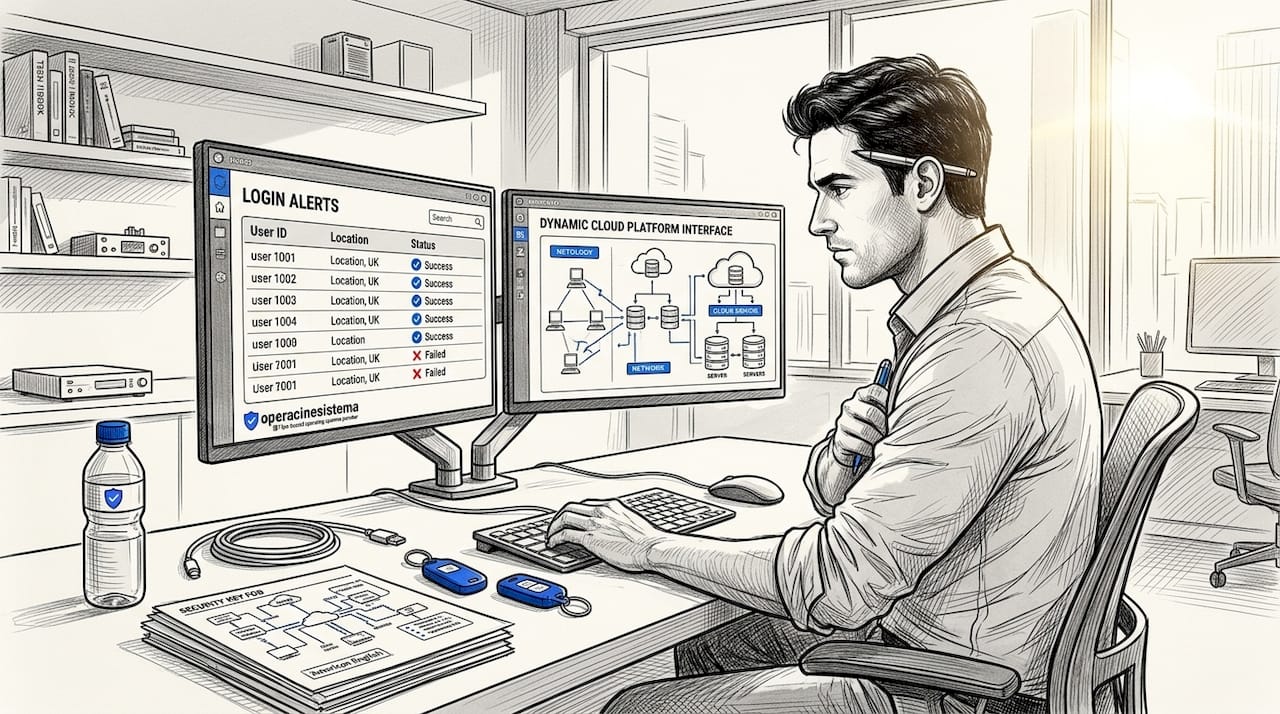
MFA and least-privilege access are the two controls that matter most in cloud environments. MFA blocks the vast majority of automated credential attacks. Least-privilege ensures that when an account is compromised, the blast radius stays small. Neither of these requires a large budget. They require discipline and consistent enforcement.
For cloud environments specifically, here is what your controls checklist should include:
- Encryption by default — All data at rest and in transit must be encrypted. No exceptions for “internal only” systems.
- Container security — Scan container images before deployment. Use read-only file systems and minimal base images to reduce the attack surface.
- API security — APIs are a top target. Require authentication on every endpoint, rate-limit calls, and log all API activity.
- Continuous permission reviews — Permissions creep silently over time. Set a quarterly calendar reminder to review who has access to what and revoke anything that is no longer needed.
- AI agent identity management — This is the newest frontier. AI tools introduce shadow risks when they are granted broad permissions without proper inventory and audit. Every AI tool in your environment needs to be treated like a user account: inventoried, permissioned minimally, and reviewed regularly.
Security leaders in 2026 are specifically flagging east-west network traffic monitoring, user behavior analytics, and AI agent identity boundaries as the three areas requiring immediate attention. If your monitoring stack only watches the perimeter, you are missing where the action actually happens.
The shift from perimeter-only to identity-focused defense is not a trend. It is a structural change driven by how attackers operate. Your controls need to reflect that reality.
Watch out: Granting broad permissions to AI tools and SaaS applications without an audit trail is one of the fastest-growing sources of permission creep in 2026. Audit it now before an incident forces you to.
5. Building a measurable, ongoing security program
One of the most common mistakes IT teams and small business owners make is treating security as a project. You deploy a tool, check a box, and move on. But security is not a project. It is a program. And programs require metrics, ownership, and scheduled reviews.
Start with three metrics that matter:
MTTR (Mean Time to Remediate): How long does it take you to close a known vulnerability? This is your single best indicator of patching program health. Track it monthly.
Detection coverage: What percentage of your assets have active monitoring? Gaps in coverage are gaps in your ability to catch incidents early.
Access review completion rate: What percentage of user accounts and permissions have been reviewed in the last 90 days? This tells you whether your least-privilege controls are actually being enforced or just documented in a policy nobody reads.
Focusing evidence collection on asset inventory and identity lifecycle controls gives small and medium-sized organizations the highest defensive return on effort. You do not need a 50-person security team to run a tight program. You need clarity on what you own, who can access it, and how fast you fix what is broken.
For Windows-based environments, applying a structured Danh sách kiểm tra bảo mật hệ điều hành Microsoft is one of the fastest ways to establish measurable controls without starting from scratch.
6. Applying data protection strategies that hold up under scrutiny
Data protection in 2026 is not just about encryption and backups. Regulators, customers, and partners want evidence that you are managing data responsibly. These are the strategies that hold up when auditors come knocking.
Classify your data before you protect it. You cannot apply appropriate controls to data you have not categorized. Build a simple four-tier classification: public, internal, confidential, and restricted. Then map controls to each tier.
Implement data minimization. Collect only what you need. Store it only as long as you need it. Every dataset you hold is a liability if it gets breached. Reducing volume reduces risk.
Enforce access logging on sensitive data. Who accessed what, when, and from where. This log is your first resource in an incident investigation and your best evidence in a regulatory inquiry.
Test your backups. Backup systems that have never been tested are not backup systems. Schedule quarterly restore tests and document the results.
AI-driven attack escalation makes data classification and access logging more urgent than ever. When attackers use automated tools to probe for exposed datasets, your classification controls determine how much damage they can do if they get in.
7. Ensuring software authenticity as a baseline security control
Here is a security control most articles skip: running genuine, licensed software. It sounds basic. But counterfeit or unlicensed software often carries embedded malware, receives no security updates, and creates immediate compliance exposure. For Windows environments, this is especially relevant.
Pirated or gray-market Windows keys are frequently tied to compromised activation servers. When those servers are taken down, your activation breaks. Worse, some fake keys install software with backdoors baked in before you ever run your first update. For a small business trying to maintain 2026 security compliance, that is an unacceptable starting point.
Genuine licensing is not a luxury. It is infrastructure. Make sure every device in your environment runs a verified, authentic copy of its operating system before you layer any additional controls on top.
My take on what actually matters in 2026
I have watched security programs come and go, and the pattern is always the same. Organizations invest heavily in detection tools while neglecting the boring fundamentals: asset inventory, patch tracking, access reviews. Then they get breached through something embarrassingly simple, like a forgotten admin account or an unpatched server sitting in a cloud subnet nobody remembered was there.
What I have learned is that frameworks like CIS Controls v8.1 and NIST CSF 2.0 are not bureaucratic checkboxes. They are distilled lessons from thousands of real incidents. When I work with teams that actually implement IG1 properly, I see faster detection times, cleaner audit outcomes, and fewer late-night incident calls.
The shift to identity-centered defense is the one I feel most strongly about. I have seen too many teams spend six figures on perimeter security while leaving MFA optional. That is like installing a reinforced door and leaving the windows open. The threat actors know this, and they exploit it every day.
My honest advice: pick one framework, implement it with discipline, and measure it. Do not try to boil the ocean. A well-executed CIS IG1 program with consistent MTTR tracking will protect most small businesses better than a half-implemented enterprise security stack. Consistency beats complexity every time.
— Danielius
Secure your environment with genuine Windows licenses
Your security controls are only as strong as the software they run on. If your Windows environment is built on unlicensed or gray-market keys, you are starting with a cracked foundation. Every patch, every control, every compliance effort is compromised from the start.
Operacinesistema specializes in genuine, verified Microsoft Windows licenses for IT professionals and small businesses. Whether you need to understand your Windows licensing options or are ready to follow a step-by-step buying guide to purchase securely, Operacinesistema has the resources and genuine keys to keep your environment compliant and protected. Do not let a fake license be the vulnerability that undoes your 2026 security program. ✅
Câu hỏi thường gặp
What is the biggest security threat for businesses in 2026?
Vulnerability exploitation is now the top breach vector, with 31% of breaches linked to unpatched systems. Fast, consistent patching is your most direct defense.
What is NIST CSF 2.0 and why does it matter?
NIST CSF 2.0 added a Govern function that makes executive accountability and supply chain risk part of your formal security program, not just optional good practice.
How many CIS Controls should a small business implement first?
Start with the 56 safeguards in CIS IG1. These cover asset inventory, account lifecycle, and access management, which are the areas most commonly exploited in small business breaches.
Is MFA really enough to protect cloud accounts?
MFA is necessary but not sufficient on its own. Pair it with least-privilege access, continuous permission reviews, and AI tool inventory to close the gaps that MFA alone does not cover.
Does unlicensed software create a real security risk?
Yes. Unlicensed or counterfeit software often misses critical security updates and can contain embedded malware. Running genuine licensed software is a foundational security control, not just a compliance requirement.