Lista de verificação de segurança do sistema operacional da Microsoft 2026: corte o malware em 50%
Over 60% of security breaches in small businesses are linked to unpatched Microsoft Windows systems, putting European SMBs at severe risk. If you run licensed Windows 10 or 11 Pro, a structured security checklist is not optional. This guide delivers practical, compliance-aware steps to strengthen your Microsoft OS security, reduce malware exposure, and meet GDPR and NIS Directive requirements. You will learn essential controls, patch management tactics, and tool comparisons tailored for small business environments.
Índice
- How to Choose the Right Security Measures for Your Licensed Microsoft OS
- Essential Security Controls for Licensed Microsoft OS
- Prioritizing Patch Management and Updates
- Comparative Evaluation of Security Tools
- Regional Compliance and Regulatory Considerations
- Summary and Situational Recommendations
- Protect Your Licensed Microsoft OS with Operacinesistema.lt
- FAQ
Principais conclusões
| Ponto | Detalhes |
|---|---|
| Timely patching | Fixes vulnerabilities linked to 60% of SMB breaches and maintains compliance. |
| Microsoft Defender | Reduces malware risk by 50% with integrated, zero-cost antivirus protection. |
| Windows Firewall | Blocks 90% of inbound network threats with minimal configuration effort. |
| BitLocker encryption | Encrypts 100% of data at rest to prevent theft and ensure GDPR compliance. |
| EU compliance | GDPR and NIS Directive mandate strong access controls and breach prevention measures. |
How to Choose the Right Security Measures for Your Licensed Microsoft OS
Selecting security measures for your Windows environment requires balancing effectiveness, performance impact, cost, ease of use, and compliance with European Union laws. Patch management, antivirus, firewall, user access controls, encryption, and compliance are critical for securing Windows OS, according to ENISA. Small businesses benefit most from solutions that integrate natively with Windows, minimizing licensing costs and IT overhead.
Prioritize automated patch management to close known vulnerabilities that attackers exploit. Windows Update handles this natively and costs nothing beyond your licensed OS. Next, enable integrated antivirus and firewall tools like Microsoft Defender and Windows Firewall, which reduce malware and network threats significantly without third-party fees. User access controls, including multi-factor authentication (MFA) and strong password policies, protect accounts from credential theft.
Data encryption with BitLocker safeguards information at rest, critical for GDPR compliance in case devices are lost or stolen. Finally, implement regular backups and document your security policies to meet NIS Directive organizational requirements. When evaluating tools, ask if they simplify management for small IT teams, reduce resource consumption, and align with secure Windows 11 Pro downloads e upgrading Windows 10 to 11 securely. Refer to ENISA secure deployment guidelines for detailed European best practices.
Key selection criteria:
- Proven effectiveness against real-world threats
- Low performance overhead on business workstations
- Minimal or zero additional licensing cost
- Simple configuration for non-expert IT staff
- Full compliance with GDPR and NIS Directive
Essential Security Controls for Licensed Microsoft OS
Foundational security for Windows 10 and 11 Pro starts with five controls that work together to protect your licensed environment. Enable automated Windows Update immediately to ensure patches deploy without manual intervention. Set active hours to avoid interruptions, and schedule restarts during off-peak times to minimize business disruption.
Activate Microsoft Defender Antivirus for real-time threat protection. Defender scans files, downloads, and email attachments continuously, reducing malware risk by 50% compared to unprotected systems. It integrates directly with Windows, requiring no separate agent or subscription for small businesses using licensed Windows 11 Pro.
Turn on Windows Firewall and configure basic inbound rules to block unauthorized network access. Windows Firewall blocks 90% of common inbound threats with default settings, making it a powerful first line of defense. Verify the firewall is active on all network profiles: Domain, Private, and Public.
Implement user account controls by enforcing strong passwords (minimum 12 characters, mixed case, numbers, symbols) and enabling multi-factor authentication (MFA) for admin accounts. Limit the number of administrator accounts to reduce attack surface. Educate employees about phishing and credential theft.
Enable BitLocker full disk encryption to protect data at rest. BitLocker encrypts 100% of disk data to prevent theft if laptops or workstations are stolen. Store recovery keys securely in Active Directory or a password manager. BitLocker is available on Windows Pro editions, making it accessible for SMBs with affordable Windows licenses. Consult Windows Firewall guidance and BitLocker encryption information for detailed setup instructions.

Pro Tip: Schedule Windows Updates during off-hours (evenings or weekends) and enable automatic restart notifications to avoid disrupting workflows.
Core controls checklist:
- Automated Windows Update with scheduled maintenance windows
- Microsoft Defender Antivirus with real-time protection enabled
- Windows Firewall active on all network profiles
- Strong passwords and MFA for all user accounts
- BitLocker encryption on all business workstations and laptops
Prioritizing Patch Management and Updates
Patch management is your top defense against known vulnerabilities that attackers exploit. 60% of SMB breaches are linked to unpatched OS systems, making timely updates non-negotiable. Small businesses often delay patching due to fears of downtime or compatibility issues, but automated update strategies and staging environments eliminate most risks.
Automate Windows Updates by enabling the recommended update settings in Windows Security. Windows 10 and 11 Pro allow you to set active hours, so updates install outside business operations. Configure your systems to check for updates daily and install automatically. Use Group Policy Objects (GPO) in multi-device environments to enforce consistent update policies across all workstations.
Avoid delaying critical security patches. Microsoft releases Patch Tuesday updates monthly, addressing zero-day vulnerabilities and exploits actively used in attacks. If you operate sensitive systems, test patches in a staging environment first, then deploy to production within 48 hours. This balance ensures protection without reckless deployment.
Delays in patching account for the majority of SMB data breaches.
Regular patching reduces exposure to exploits and keeps your business compliant with GDPR’s requirement to implement appropriate technical measures. The NIS Directive also mandates timely risk management, which includes addressing known software vulnerabilities. If your organization struggles with update failures, use Windows Update Medic Service to self-heal common issues automatically. Review your Windows update process to ensure seamless transitions. For more breach statistics, see Verizon 2025 breach data.
Pro Tip: Enable Windows Update Medic Service in Services.msc to automatically repair update components if installation fails.
Step-by-step guide to enable automatic Windows Updates:
- Open Settings and navigate to Update & Security.
- Click Windows Update and select Advanced options.
- Enable automatic download and installation of updates.
- Set active hours to match your business operating schedule.
- Schedule restarts for off-peak times (evenings or weekends).
- Verify update success by checking the update history log weekly.
Comparative Evaluation of Security Tools
Choosing between Microsoft Defender and third-party antivirus software depends on your budget, IT expertise, and security requirements. Microsoft Defender reduces malware risk by 50% and integrates natively with Windows, eliminating licensing fees and compatibility issues. Third-party antivirus solutions can offer advanced features like behavioral analysis or sandboxing, but they typically consume 30% more system resources and require separate subscriptions.
Integration with Windows OS enhances Defender’s efficiency. It leverages kernel-level security features, Windows Security Center, and Secure Boot to provide layered protection. For small businesses managing multiple devices, Defender’s centralized management through Intune or Group Policy simplifies IT administration. Third-party AV software often requires separate management consoles and agents, increasing complexity.
Small businesses benefit most from Defender’s low cost and minimal performance impact. If your workstations run resource-intensive applications (CAD, video editing, data analysis), Defender’s lightweight footprint preserves productivity. However, organizations handling highly sensitive data or operating in regulated industries may opt for third-party solutions with specialized compliance features. Evaluate your specific threat landscape and operational constraints before deciding. For integrated protection, consider Microsoft Defender integration with Windows. Review Microsoft Defender effectiveness for official benchmarks.
Comparison table:
| Metric | Microsoft Defender | Third-Party Antivirus |
|---|---|---|
| Malware protection | 50% risk reduction, real-time scanning | Varies by vendor, often 55-60% reduction |
| System resource usage | Low (5-10% CPU during scans) | Moderate to high (15-40% CPU during scans) |
| Custo | Included with Windows Pro licenses | €30-€80 per device per year |
| Integration | Native Windows integration, no agent needed | Requires separate agent and management console |
| Ease of IT management | Centralized via Group Policy or Intune | Vendor-specific console, often more complex |
Pros and cons:
- Microsoft Defender Pros: Zero additional cost, seamless Windows integration, automatic updates, low resource consumption.
- Microsoft Defender Cons: Fewer advanced features (no sandboxing, limited behavioral analysis).
- Third-Party AV Pros: Advanced threat detection, specialized compliance tools, dedicated support.
- Third-Party AV Cons: Higher cost, increased system overhead, potential compatibility issues.
Regional Compliance and Regulatory Considerations
European small businesses must align their Microsoft OS security with GDPR, the NIS Directive, and ENISA recommendations. GDPR mandates strong data protection measures, including encryption, access controls, and timely breach notification. Failure to protect personal data can result in fines up to 4% of annual turnover or €20 million, whichever is higher.
The NIS Directive requires operators of essential services and digital service providers to implement technical and organizational measures managing cybersecurity risks. Even if your SMB is not directly regulated, adopting NIS principles demonstrates due diligence and strengthens your security posture. ENISA provides secure deployment guidelines aligning with GDPR and NIS Directive for SMBs, recommending patch management, encryption, and access controls as baseline security measures.
Small businesses must document security policies, conduct regular audits, and enforce compliance across all Windows devices. Use Group Policy Objects to standardize security configurations, ensuring every workstation meets minimum requirements. Maintain audit logs of access attempts, configuration changes, and security incidents for at least six years to satisfy GDPR record-keeping obligations. Review Microsoft licensing compliance to ensure your OS licenses are genuine and audit-ready. Consult ENISA guidelines for detailed European security baselines.
Pro Tip: Schedule quarterly security audits of your Windows settings to verify compliance with GDPR and NIS Directive requirements.
Key compliance requirements:
- GDPR: Encrypt personal data at rest and in transit (use BitLocker and HTTPS).
- GDPR: Implement access controls and MFA to prevent unauthorized data access.
- NIS Directive: Deploy timely patches and maintain incident response procedures.
- ENISA: Follow secure Windows deployment baselines for patch management and firewall configuration.
- Record-keeping: Maintain audit logs and security documentation for at least six years.
Summary and Situational Recommendations
Your Microsoft OS security checklist should prioritize patch management, integrated antivirus and firewall, strong access controls, encryption, regular backups, and compliance enforcement. For budget-conscious SMBs, combine Microsoft Defender, Windows Firewall, and automated Windows Updates to achieve robust protection without licensing fees. This setup delivers real-world malware reduction and network threat blocking with minimal IT overhead.
If your business handles sensitive customer data or operates in regulated sectors, upgrade to Windows 11 Pro for enhanced kernel-level protections and Virtualization-Based Security (VBS). Windows 11 offers up to 20% better protection against advanced threats compared to Windows 10, making it ideal for high-risk environments.
Small IT teams managing multiple devices should use Group Policy Objects (GPO) to enforce security configurations consistently, reducing manual errors and ensuring all workstations meet baseline standards. GPO automates password policies, firewall rules, BitLocker encryption, and update schedules across your network. If you lack in-house expertise, consider consulting a professional to configure GPO templates correctly.
Review and adjust your security posture quarterly as threats evolve and your business grows. Add new controls when you expand operations, onboard remote workers, or adopt cloud services. Security is not a one-time setup but an ongoing process of monitoring, patching, and improving defenses.
Summary comparison table:
| Control | Effectiveness | Custo | Ease of Use | Compliance Impact |
|---|---|---|---|---|
| Patch management | Fixes 60% of breach vectors | Included | High (automated) | Critical for GDPR/NIS |
| Microsoft Defender | 50% malware reduction | Included | High | Supports GDPR tech measures |
| Windows Firewall | 90% inbound threat blocking | Included | Medium | Prevents unauthorized access |
| MFA and strong passwords | Blocks credential theft | Low (Azure AD Free) | Medium | GDPR access control requirement |
| BitLocker encryption | 100% data-at-rest protection | Included (Pro) | Medium | Mandatory for GDPR compliance |
| Regular backups | Ensures data recovery | Low (cloud or NAS) | High | GDPR data availability |
| GPO enforcement | Reduces config errors | Included | Medium (requires setup) | Ensures consistent compliance |
Situational picks:
- Tight budget: Use Microsoft Defender, Windows Firewall, and automated updates with no additional licensing.
- Sensitive data environments: Upgrade to Windows 11 Pro for kernel protections and enable BitLocker encryption immediately.
- Multi-device SMBs: Deploy Group Policy Objects to standardize security settings and reduce IT management effort.
- Compliance-focused businesses: Document all security measures, maintain audit logs, and conduct quarterly reviews to meet GDPR and NIS requirements.
Protect Your Licensed Microsoft OS with Operacinesistema.lt
Securing your Windows environment starts with genuine, licensed software. Operacinesistema.lt offers authentic Windows 11 Pro licenses and digital keys at competitive prices, ensuring your OS is fully activated and compliant with Microsoft’s security requirements. You can buy genuine Windows 11 Pro keys with instant email delivery, eliminating the risk of counterfeit software that undermines security controls.
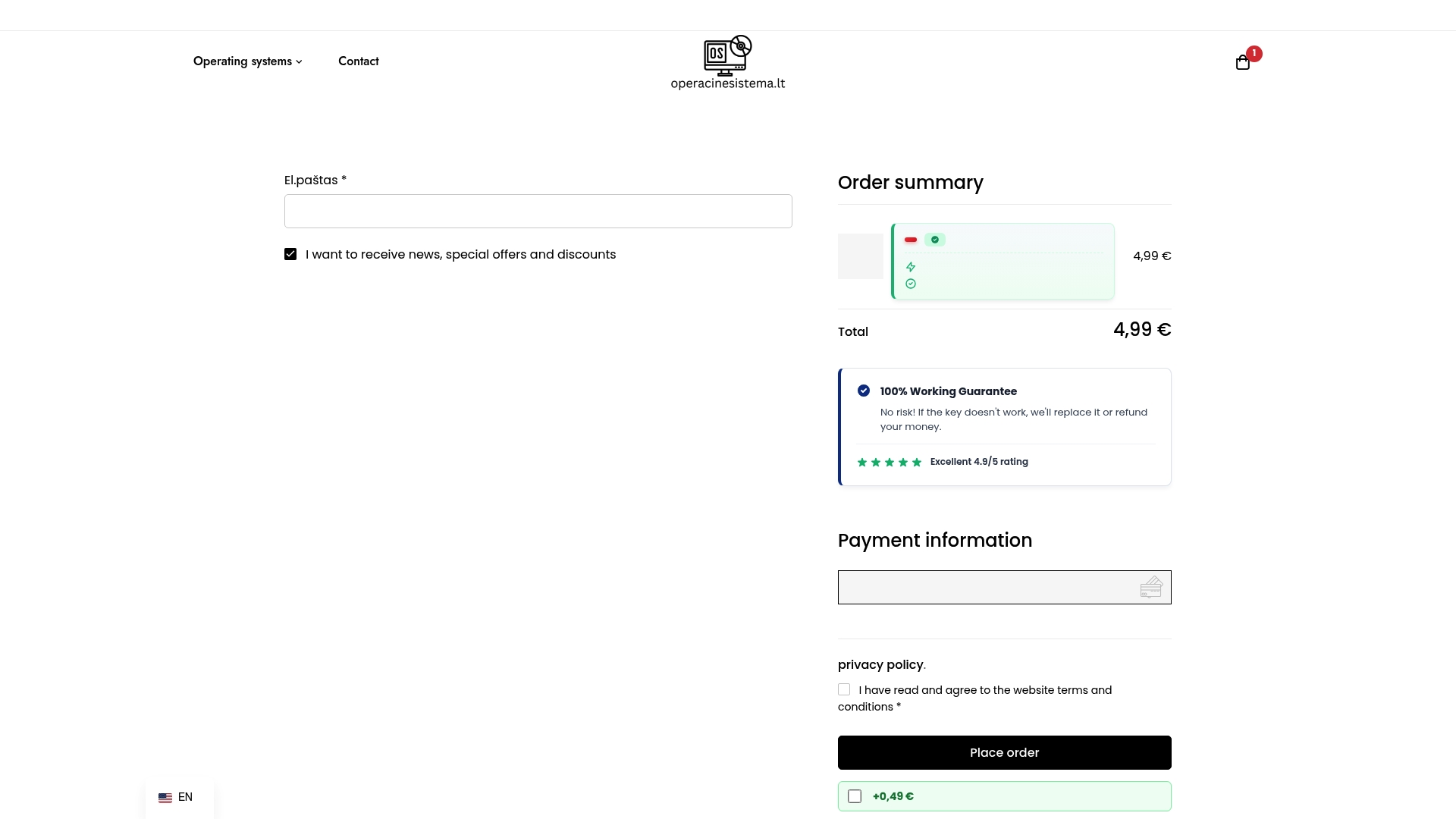
We provide comprehensive support to help you activate and manage your Windows licenses correctly, including guides on verifying authenticity. Combine proper licensing with the security checklist outlined in this article to protect your business from malware, data breaches, and compliance penalties. Whether you need affordable Windows 11 Pro keys for multiple workstations or want to verify your Windows licence key for authenticity, Operacinesistema.lt delivers peace of mind through legitimate, secure transactions.
FAQ
What is the first step in securing a licensed Microsoft OS?
Enable automated Windows Updates immediately to fix known vulnerabilities. This single action addresses the majority of attack vectors exploited in SMB breaches.
Is Microsoft Defender sufficient for antivirus protection in small businesses?
Yes, Microsoft Defender reduces malware risk by 50% and integrates seamlessly with Windows, but combine it with Windows Firewall, timely patching, and strong access controls for comprehensive protection.
How can SMBs ensure GDPR compliance with Windows security measures?
Implement BitLocker encryption for data at rest, enforce MFA and strong passwords, maintain timely patch management, and document your security policies with audit logs retained for six years.
Can I use Group Policy Objects if I’m not an IT expert?
Yes, but small businesses benefit from professional guidance to configure GPO templates correctly. Once set up, GPO automates security enforcement across all devices, reducing manual errors.
Should I upgrade from Windows 10 to 11 for better security?
Windows 11 offers up to 20% better kernel-level protection and Virtualization-Based Security, making it recommended for SMBs handling sensitive data or operating in regulated industries.