Benefits of Licensed Software: Secure, Legal, Reliable
Choosing the right Microsoft operating system software is more than just finding a good deal. Businesses face increasing pressure to meet legal and security standards, and relying on illegitimate software can expose organizations to costly penalties and major cybersecurity threats. By prioritizing licensed software, you gain access to regular updates, vendor support, and full legal protection—critical advantages for maintaining reliable systems and safeguarding your company’s reputation.
Table of Contents
- What Licensed Software Means For Businesses
- Types Of Licensed Software And Their Uses
- Key Features: Security, Updates, And Support
- Legal Compliance And Avoiding Costly Risks
- Cost Effectiveness Versus Unlicensed Options
Key Takeaways
| Point | Details |
|---|---|
| Licensed software is essential for legal compliance. | It provides organizations with protection against legal risks, ensuring adherence to regulations and standards. |
| Investing in licensed software enhances security. | Regular updates and technical support help safeguard against cybersecurity threats, reducing operational disruptions. |
| Different licensing models cater to specific needs. | Businesses should choose the appropriate license type to align with their operational goals and budget constraints. |
| Cost-effectiveness of licensed software outweighs unlicensed alternatives. | While unlicensed software may seem cheaper, the hidden risks can lead to significant financial and reputational damages. |
What Licensed Software Means for Businesses
Licensed software represents a critical strategic asset for modern businesses, providing far more than simple operational tools. When organizations adopt licensed software solutions, they unlock comprehensive legal, security, and operational advantages that directly impact their competitive positioning.
The core value of licensed software lies in its ability to provide businesses with legally sanctioned, fully supported digital infrastructure. Unlike unlicensed alternatives, licensed software ensures organizations receive:
- Regular security updates
- Full feature access
- Vendor technical support
- Legal compliance protection
- Risk mitigation strategies
By understanding software licensing frameworks, businesses can develop robust technology strategies that align with their operational goals. License management involves developing clear policies that prevent potential violations and support long-term technological growth. This proactive approach helps companies avoid expensive legal complications while maintaining a flexible, scalable digital ecosystem.
Importantly, licensed software provides significant legal and operational safeguards. Organizations using properly licensed tools protect themselves from potential cybersecurity threats, ensure regulatory compliance, and demonstrate professional integrity to clients and partners. The investment in licensed software is essentially an investment in the company’s reputation, operational efficiency, and strategic technological capabilities.
Pro tip: Conduct an annual software license audit to ensure your organization remains compliant and optimizes its technology investments.
Types of Licensed Software and Their Uses
Businesses today navigate a complex landscape of software licensing models that cater to diverse organizational needs and technological requirements. Software licenses encompass multiple categories designed to provide flexible, legally compliant access to critical digital tools and platforms.
The primary types of software licenses include:
- Perpetual Licenses: One-time purchase granting indefinite software usage
- Subscription Licenses: Time-limited access with recurring payment
- Per-User Licenses: Software access restricted to specific user count
- Site Licenses: Unlimited usage within a specific organizational location
- Named User Licenses: Access tied to specific individual user accounts
Different license types support varied organizational strategies, ranging from proprietary models with strict source code control to open source frameworks that enable collaborative development. Proprietary licenses typically restrict modification and redistribution, while open source licenses provide more flexibility for developers and organizations seeking customizable solutions.
Understanding these licensing frameworks allows businesses to make strategic technology investments that align with their operational goals, budget constraints, and compliance requirements. By carefully selecting appropriate license types, companies can optimize their software expenditures, ensure legal protection, and maintain technological agility in a rapidly evolving digital landscape.
Here’s a comparison of common software license types and their best-fit use cases:
| Type of licence | Typical Application | Scalability | Customization Potential |
|---|---|---|---|
| Perpetual License | Legacy systems, stable apps | Limited | Very low |
| Subscription | Modern cloud platforms | High | Moderate |
| Per-User | Remote teams, SaaS apps | Flexible | Moderate |
| Site License | Large organizations onsite | Very high | Low |
| Named User License | Individual-centric roles | Depends on staff | Moderate |
Pro tip: Consult with your IT department to conduct a comprehensive license audit and identify opportunities for cost optimization and compliance.
Key Features: Security, Updates, and Support
Licensed software provides a robust shield against cybersecurity threats through comprehensive security management features that go far beyond basic protection. Robust software security practices are critical for organizations seeking to maintain technological resilience and protect their digital infrastructure.
Key security and support features of licensed software typically include:
- Automatic vulnerability patch deployment
- Regular security update cycles
- Dedicated technical support channels
- Comprehensive threat monitoring
- Compliance validation mechanisms
- Incident response protocols
NIST guidelines emphasize structured update management as a fundamental approach to mitigating emerging cyber risks. Licensed software provides organizations with systematic mechanisms to address potential security vulnerabilities quickly and efficiently, ensuring continuous protection against evolving digital threats.

Vendor support represents another critical advantage of licensed software, offering businesses direct access to expert technical assistance, troubleshooting resources, and strategic guidance. This comprehensive support ecosystem enables organizations to resolve technical challenges rapidly, minimize operational disruptions, and leverage professional expertise to optimize their technological investments.
Pro tip: Establish a regular schedule for reviewing and implementing software security updates to maintain optimal system protection.
Legal Compliance and Avoiding Costly Risks
Navigating the complex landscape of software licensing requires a strategic approach to legal compliance management that protects organizations from potentially devastating financial and operational risks. Software license compliance demands comprehensive strategies to prevent unintended legal violations that could compromise an organization’s technological infrastructure.
Key risks associated with noncompliance include:
- Substantial monetary penalties
- Potential legal litigation
- Reputational damage
- Software access revocation
- Intellectual property disputes
- Operational disruptions
License enforcement involves continuous monitoring and proactive risk management. Organizations must develop robust internal policies that systematically track software usage, verify licensing agreements, and ensure ongoing adherence to vendor and regulatory requirements. This approach transforms compliance from a reactive challenge into a strategic organizational capability.
Comprehensive compliance strategies go beyond simple documentation. They require a holistic approach involving legal teams, IT departments, and management to create a culture of awareness and accountability. By implementing regular software audits, employee training programs, and clear usage guidelines, businesses can mitigate risks and maintain a legally sound technological ecosystem.
Pro tip: Develop a centralized software license tracking system to monitor usage, expiration dates, and compliance requirements across your organization.
Cost Effectiveness Versus Unlicensed Options
Companies often mistakenly view unlicensed software as a cost-saving strategy, overlooking the substantial hidden financial risks associated with non-compliant technology solutions. Total cost of ownership analysis reveals that licensed software provides significantly more value beyond its initial price tag.
The potential financial risks of unlicensed software include:
- Substantial legal penalty expenses
- Unexpected security breach costs
- Potential business operation interruptions
- Reputation damage and client trust erosion
- Mandatory retroactive licensing fees
- Cybersecurity vulnerability expenses
Proper license management optimizes organizational investments by ensuring comprehensive protection and operational reliability. Licensed software transforms from a perceived expense into a strategic asset, providing predictable budgeting, consistent performance, and robust legal protection that far outweigh short-term savings from unlicensed alternatives.
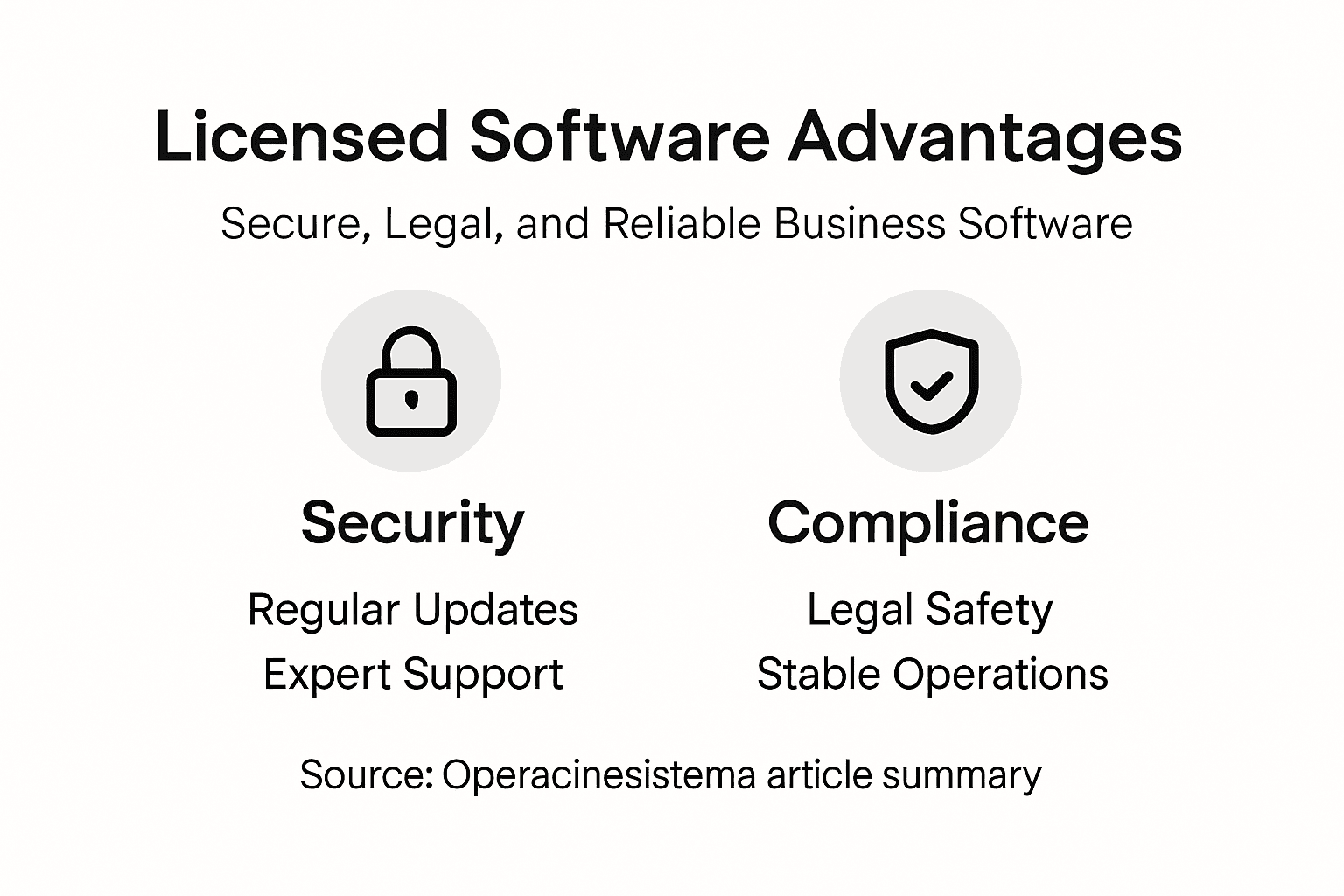
Businesses must recognize that cost-effectiveness extends beyond initial purchase price. Licensed software delivers tangible and intangible benefits including continuous updates, dedicated technical support, comprehensive security patches, and legal compliance. These features create a more stable, secure, and efficient technological ecosystem that directly contributes to long-term organizational success and risk mitigation.
This table summarizes business impacts of licensed versus unlicensed software:
| Factor | Licensed Software | Unlicensed Software |
|---|---|---|
| Legal Risks | Minimized | Significant penalties |
| Security Management | Proactive and ongoing | Inconsistent, often lacking |
| Vendor Support | Full access to experts | No official support |
| Cost Predictability | Budget-friendly over time | Unplanned, high costs |
| Brand Reputation | Enhanced trust and credibility | Potential reputational loss |
Pro tip: Conduct a comprehensive total cost of ownership analysis before selecting software to understand long-term financial implications.
Secure Your Business with Genuine Licensed Software Today
The article highlights critical challenges businesses face such as legal compliance protection, cybersecurity risks, and operational reliability through licensed software. If you want to avoid costly penalties, ensure continuous security updates, and gain full vendor support, choosing the right licensed software like original Microsoft Windows is essential. Avoid the hidden dangers of unlicensed options and invest in the peace of mind that comes with genuine licenses backed by trusted expertise.
Discover authentic Microsoft Windows 10 and Windows 11 Pro licenses at Operational system, your trusted source for secure and legally compliant software solutions. Benefit from instant digital key delivery, physical USB versions, and dedicated customer support to keep your systems fully licensed and protected. Act now to safeguard your technology infrastructure and optimize your IT investments by purchasing from Operacinesistema. Explore how licensed software empowers your business performance and legal standing with our reliable products and services.
Frequently Asked Questions
What are the main advantages of using licensed software?
Licensed software provides legal compliance, robust security, regular updates, vendor support, and risk mitigation strategies, all of which enhance operational efficiency and protect the organization’s reputation.
How does licensed software contribute to cybersecurity protection?
Licensed software typically includes automatic updates, vulnerability patch deployment, and comprehensive threat monitoring, which help organizations proactively manage and mitigate cybersecurity risks.
What types of software licenses are available, and how do they differ?
Common types of software licenses include perpetual licenses (one-time purchase), subscription licenses (recurring payment), per-user licenses (restricted to specific users), site licenses (unlimited usage at a location), and named user licenses (tied to individual accounts). Each type serves different organizational needs and budgetary constraints.
Why is compliance with software licensing important for businesses?
Compliance prevents potential legal complications such as monetary penalties, litigation, and reputational damage. It also safeguards the organization from operational disruptions caused by unauthorized software use.