如何管理软件续订并降低成本
简而言之:
- Properly managing software renewals prevents wasted spend and strengthens negotiation leverage by starting early and centralizing contract data. Regular audits, stakeholder involvement, and strategic renegotiations ahead of expiry significantly reduce auto-renewal costs and licensing excess. Continuous tracking of KPIs and fostering vendor relationships enable organizations to optimize their software portfolios over time.
Knowing how to manage software renewals is the difference between controlled spending and money quietly bleeding out every quarter. 25-30% of SaaS spend gets wasted on unused or mismanaged licenses in organizations that skip proactive renewal processes. Auto-renewals trigger without review, licenses stack up for employees who left months ago, and vendors lock you into terms you never renegotiated. This guide gives you a practical, step-by-step system to take back control of your software portfolio, reduce unnecessary costs, and negotiate from a position of real knowledge instead of deadline panic.
目录
- 主要收获
- How to manage software renewals: build the right foundation first
- A step-by-step proactive renewal process
- Common mistakes that cost you money at renewal
- Measuring success and optimizing over time
- My take on why most businesses get renewals wrong
- Take control of your software licenses today
- FAQ
主要收获
| 点 | 详细信息 |
|---|---|
| Start renewals 90-120 days early | Beginning the process well before expiry gives you time to audit, negotiate, and avoid costly auto-renewals. |
| Centralize all contract data | Store every license, term, and deadline in one searchable system so nothing slips through the cracks. |
| Audit usage before every renewal | Reviewing actual usage prevents overpaying for seats your team no longer needs. |
| Treat renewals as strategic decisions | Every renewal window is a chance to renegotiate pricing, terms, and license counts. |
| Track KPIs to improve over time | Measuring renewal rate, time to renew, and cost savings turns each cycle into a learning opportunity. |
How to manage software renewals: build the right foundation first
Before you can run a clean renewal process, you need the right infrastructure in place. Too many businesses skip this step and then wonder why renewals always feel reactive and expensive. The good news is that setting up these prerequisites is a one-time investment that pays off across every renewal cycle going forward.
Centralize your contract and license data
78% of efficient businesses store contracts in centralized, searchable databases. If your license agreements are split across email threads, shared drives, and someone’s desktop folder, you are already starting from a disadvantaged position. Pick one system, whether a dedicated Contract Lifecycle Management (CLM) platform or even a well-structured spreadsheet to start, and get every software contract into it.
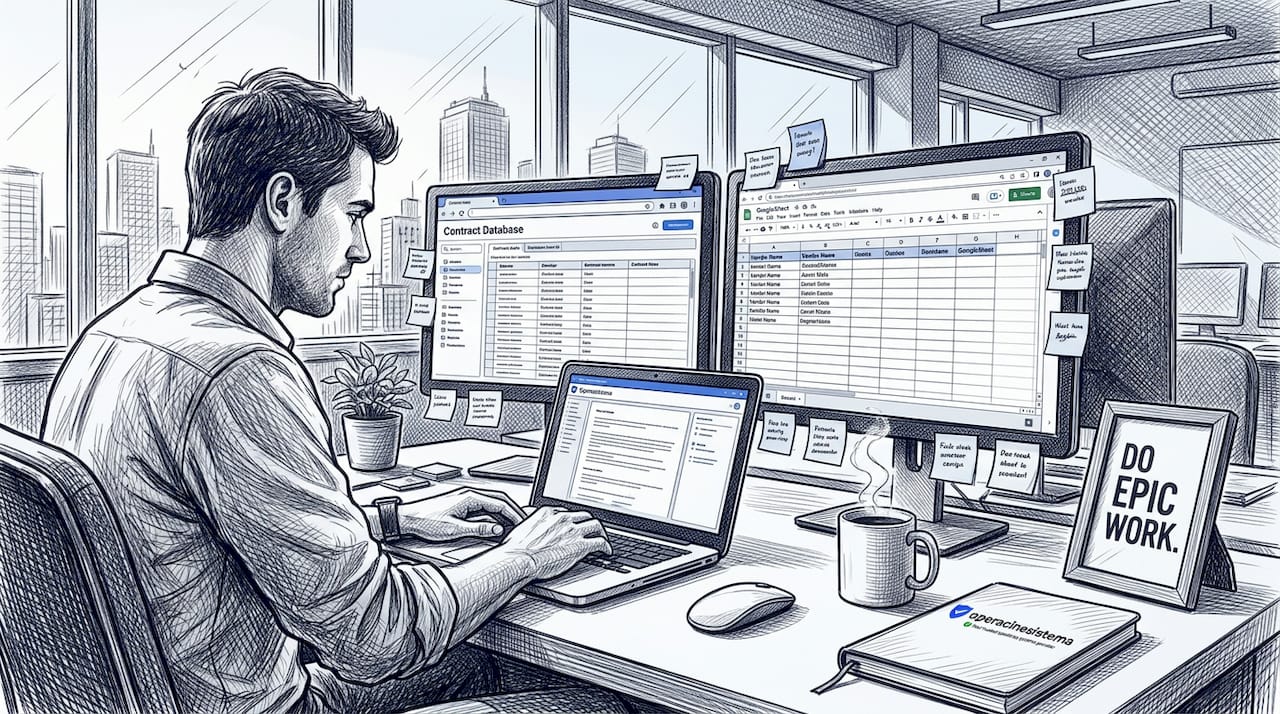
Each entry should capture the vendor name, license count, contract start and end dates, auto-renewal clauses, notice periods, and the dollar value. This single source of truth is what makes every other step in this guide possible.
Set up automated renewal alerts
Automated 90/60/30 day alerts pushed to email or Slack prevent renewals from being forgotten. Missing a notice window is one of the most expensive mistakes in software subscription management because it leaves you locked into another full term with zero negotiating leverage. Set your alerts to fire at each of those three intervals so your team has time to act, not just react.
Assign clear ownership and build a cross-functional team
Successful renewal teams involve procurement, finance, legal, and IT. When nobody owns a renewal, everyone assumes someone else is handling it. Assign a primary owner for each contract and create a lightweight cross-functional committee that reviews high-value renewals together. This removes the ownership gaps that silently cause missed deadlines and overspending.
Here is what your foundational data setup should include for each software contract:
- Contract owner: The person accountable for managing this renewal end-to-end
- Renewal date and notice period: Exact deadlines so you know when action is required
- License count vs. active users: Current entitlement compared to real usage
- Auto-renewal clause details: Whether it triggers automatically and under what conditions
- Historical spend: What you paid last time so you have a baseline for negotiation
- Vendor contact: Your account manager’s name and contact information
| Foundation Element | Why It Matters |
|---|---|
| Centralized contract repository | Single source of truth prevents missed deadlines and duplicated licenses |
| Automated alert schedule | 90/60/30 day reminders give you enough lead time to negotiate |
| Cross-functional ownership | Removes accountability gaps that cause costly last-minute renewals |
| Usage and spend data | Gives you the negotiation leverage and evidence to right-size licenses |
专业提示 If you are just starting out and a full CLM platform feels like overkill, a shared Google Sheet with conditional formatting on renewal dates is a perfectly valid first step. The habit of centralizing matters more than the tool you use.
A step-by-step proactive renewal process
"(《世界人权宣言》) renewal process should start at least 90 to 120 days before contract expiry. This timeline gives you room to complete usage audits, gather stakeholder input, evaluate alternatives, and negotiate without being backed into a corner by an approaching deadline. Here is the workflow that actually works.
-
Day 120: Pull the contract and confirm all terms. Review the current agreement in full. Note the auto-renewal clause, the notice period required to cancel or modify, the current pricing structure, and any SLA commitments. This is your starting point for everything that follows.
-
Day 110: Run a usage audit. Pull actual usage data from the vendor portal, your IT admin tools, or your SaaS management platform. Compare active users to licensed seats. Look specifically for orphaned seats, which are licenses assigned to employees who have left or changed roles. These are pure cost leakage and are one of the most common renewal mistakes businesses make.
-
Day 100: Gather stakeholder input. Talk to the department leads and power users who rely on this software daily. Find out what features they actually use, what problems they have with the tool, and whether the license count still matches team size. You need this before you can negotiate intelligently.
-
Day 90: Evaluate vendor performance. Did the vendor deliver on their SLA? Were there outages, support failures, or unresolved issues? Document these objectively. This is not about building a complaint list. It is about having factual evidence to support renegotiation or to justify switching to an alternative.
-
Day 75: Research the market. Check what comparable tools cost. Even if you plan to renew with the same vendor, knowing your alternatives gives you real leverage. Vendors are far more willing to offer discounts when they know you have done your homework and have other options on the table.
-
Day 60: Open negotiations with the vendor. Contact your account manager and signal your intent to renew, but make clear you are reviewing pricing and terms. Vendors are willing to offer discounts during renegotiated renewals rather than auto-renews. Use your usage data, market research, and any performance issues as your negotiation tools.
-
Day 45: Negotiate specific terms. Do not just focus on price. Push for right-sized license counts based on your actual usage audit. Negotiate improved SLAs if performance has been a problem. Ask for multi-year pricing if the software is critical and you are confident in the vendor. Request flexibility clauses for scaling up or down during the term.
-
Day 30: Finalize and document. Get the agreed terms in writing before signing. Make sure the new contract reflects every point that was negotiated verbally. Update your centralized repository with the new contract, renewal date, and all modified terms.
-
Day 0: Execute and close the loop. Sign the contract and notify all relevant stakeholders. Schedule the first alert for the next renewal cycle immediately. Do not wait until the new contract is expiring in 12 months to start thinking about it again.
专业提示 Always negotiate toward the end of a vendor’s fiscal quarter. Sales teams are under quota pressure, and you are far more likely to get pricing concessions or added features during those final weeks than at any other point in the year.
Common mistakes that cost you money at renewal
Even with good intentions, businesses fall into the same traps over and over. Recognizing these patterns is the first step to avoiding them.
🛑 Defaulting to auto-renewal without review. Auto-renewals are the single most expensive passive habit in software subscription management. They lock you into last year’s pricing, last year’s license count, and last year’s terms, with zero opportunity to optimize. Never treat auto-renewal as an acceptable default. Treat every renewal as a deliberate decision.
🛑 Failing to adjust license counts. Most businesses add seats over time and almost never remove them. After layoffs, reorganizations, or software consolidations, those unused licenses keep billing. Integrating your SaaS management tools with HR systems means that when an employee departs, their licenses are flagged automatically rather than sitting idle and costing you money at the next renewal.
🛑 Poor communication across teams. When IT owns a license but Finance is responsible for the budget and the actual users sit in Marketing, nobody has the full picture. Renewals managed in silos produce bad decisions. A cross-functional review committee fixes this.
🛑 Negotiating at the last minute. Walking into a renewal negotiation with five days before the deadline sends one clear signal to your vendor: you have no leverage. Start early, as covered above, and you negotiate from a position of confidence.
🛑 Ignoring compliance and security requirements. Software renewals are not purely a cost exercise. Check that the renewed tool still meets your security standards, data residency requirements, and any industry compliance obligations. Missing this can create far bigger costs down the road than a slightly higher license fee would have.
“Renewal management transforms from a cost center to an optimization opportunity the moment you treat it as strategic lifecycle management rather than annual paperwork.”
The businesses that consistently pay less for software and get better terms are not necessarily the biggest buyers. They are the most prepared ones.
Measuring success and optimizing over time
Running one clean renewal is good. Building a process that gets better every cycle is where the real savings accumulate. Measuring your renewal performance gives you the data to prove what is working and to identify where to improve.
The KPIs worth tracking
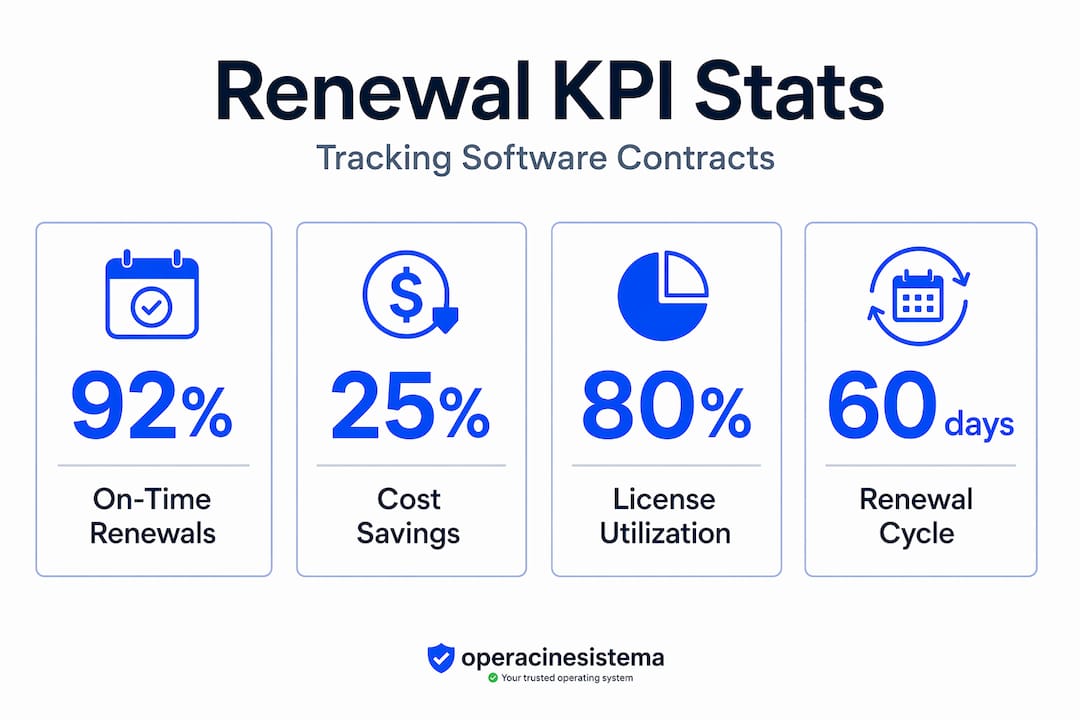
Tracking renewal KPIs enables continuous improvement across every software contract in your portfolio. These are the metrics that matter most for managing software renewal costs:
| KPI | What It Measures | Target |
|---|---|---|
| Renewal rate | Percentage of contracts renewed on time vs. lapsed | 95%+ |
| Time to renew | Days from initial review to signed contract | Under 45 days |
| Cost savings vs. prior term | Dollar reduction achieved through negotiation | 10-20% annually |
| License utilization rate | Active users as a percentage of licensed seats | 80-90% minimum |
| Compliance adherence | Contracts renewed in full compliance with policy | 100% |
Post-renewal reviews
After every significant renewal, hold a brief retrospective. Ask what went well, what caused delays, and whether the outcome matched expectations. This does not need to be a lengthy meeting. Even a 30-minute debrief with the key stakeholders builds institutional knowledge that makes the next renewal smoother.
Using SaaS management platforms
CLM platforms and SaaS management tools automate alerts, track contract obligations, and surface usage analytics in one place. For businesses managing more than 20 software contracts, investing in a dedicated platform pays for itself quickly. The visibility alone prevents the kind of passive overspending that drains 25-30% of SaaS budgets in poorly managed organizations.
专业提示 Build a simple annual savings report that documents what you negotiated down vs. the auto-renewal price for each contract. Share it with leadership. It makes the renewal process visibly valuable and secures the internal support you need to keep doing it well.
My take on why most businesses get renewals wrong
I’ve seen businesses of every size approach software renewals like an annual bill to pay rather than a decision to make. And that mindset is exactly what vendors count on. When you auto-renew without a second thought, you are essentially telling your vendor that their product is irreplaceable and their pricing is fine. Neither of those things is usually true.
In my experience, the organizations that save the most on software are not the ones with the biggest negotiating budgets. They are the ones that show up prepared. They have usage data. They know what competitors charge. They have maintained continuous contact with vendors throughout the contract term, not just when renewal season hits. That relationship continuity changes the dynamic completely.
I’ve also watched the vendor consolidation trend accelerate sharply. Businesses are actively rationalizing their software estates at renewal, cutting tools that overlap in function and negotiating harder with the vendors that survive the cut. This is not a cost-cutting panic. It is smart portfolio management, and it is becoming the baseline expectation for any business that takes its software spend seriously.
The advice I give most often is simple: do not wait for the renewal notice to care about the contract. Care about it throughout the year. Review usage quarterly. Document vendor performance as it happens. When renewal time arrives, you will not be scrambling. You will be ready.
Treating software renewals as strategic lifecycle management rather than reactive paperwork is the single mindset shift that separates businesses bleeding money on software from the ones that consistently optimize their spend.
— Danielius
Take control of your software licenses today
Managing renewals is only half the picture. The other half is making sure every license in your portfolio is legitimate, correctly classified, and properly documented before you walk into any renewal conversation.
At Operacinesistema, we help businesses get their software licensing house in order. Whether you are dealing with Microsoft OS licenses across multiple workstations or trying to understand which license types fit your needs at renewal time, we have the resources to guide you. Our SMB compliance checklist is a practical starting point for any business that wants to audit its current software standing, confirm compliance, and enter renewals with accurate data. You cannot negotiate from a position of strength if you do not know exactly what you own and what you owe. Start there, and the rest of the renewal process becomes significantly easier. ✅
FAQ
What is the best time to start a software renewal process?
Start at least 90 to 120 days before the contract expiry date. This window gives you time to run a usage audit, gather stakeholder input, and negotiate terms without deadline pressure.
How do you avoid paying for unused software licenses?
Audit your active users against licensed seats before every renewal and connect your SaaS management tools to HR systems so that departing employees’ licenses are flagged automatically. Orphaned seats are one of the most common and preventable sources of renewal overspending.
Is auto-renewal ever a safe option?
Auto-renewal should never be treated as a default strategy. Every renewal is an opportunity to renegotiate pricing and terms. Vendors regularly offer better deals to customers who engage rather than silently renew.
What KPIs should I track for software renewal management?
The most useful metrics include renewal rate, time to renew, cost savings versus the prior term, license utilization rate, and compliance adherence. Tracking these KPIs systematically turns each renewal cycle into a measurable improvement opportunity.
How can small businesses manage renewals without a dedicated procurement team?
Start with a centralized spreadsheet that tracks all contract dates, license counts, and auto-renewal clauses. Set calendar reminders at 90, 60, and 30 days before each expiry. Even without dedicated procurement staff, following a structured renewal workflow prevents the most costly mistakes.