Software Purchase Tips for Businesses: 2026 Guide
TL;DR:
- Proper software procurement involves defining measurable outcomes, evaluating vendors with structured scorecards, and negotiating total cost of ownership carefully.
- Implementing a disciplined process manages risk, optimizes license utilization, and ensures successful adoption for maximum ROI.
Software procurement is defined as the structured process of identifying, evaluating, contracting, and deploying business software to achieve specific operational outcomes. Most companies lose money on software not because they pick the wrong product, but because they skip the process entirely. The best software purchase tips for businesses follow a proven five-step framework: define outcomes, explore options, evaluate vendors, negotiate contracts, and plan rollout. Tools like Capterra, platforms like AuraVMS, and certifications like SOC 2 are the reference points every procurement team should know before signing anything.
1. Software purchase tips for businesses start with defining outcomes
The single biggest mistake in buying software for companies is starting with a category instead of a problem. You search for “project management software” before you’ve defined what’s actually broken. That’s category-driven buying, and it almost always leads to overpaying for features you won’t use.

Right tool selection starts with defining the business problem first, then mapping software features to that specific problem. Write down the outcome you want in measurable terms. “Reduce invoice processing time from 5 days to 1 day” is a useful requirement. “Better accounting software” is not.
Here’s what a solid requirements process looks like:
- Define the problem in one sentence, with a measurable current state and target state
- List the workflows that the software must support, ranked by priority
- Set a realistic budget that includes implementation, training, and ongoing support costs, not just the license fee
- Identify stakeholders from finance, IT, operations, and legal who will be affected by the purchase
- Agree on success metrics before you talk to a single vendor
Involving cross-functional stakeholders early prevents the classic scenario where IT buys a tool that finance refuses to use. Alignment at the requirements stage saves weeks of rework after go-live.
Pro Tip: Write your requirements as user stories. “As a finance manager, I need to approve invoices from my phone” is more useful to a vendor than a generic feature checklist.
2. How to build a quality vendor shortlist
Once your requirements are documented, build an initial list of five to eight products. Use Capterra, G2, and Gartner Peer Insights to find candidates with verified reviews from companies in your industry and size range. Don’t rely on a single source. Cross-reference at least two review platforms before adding a vendor to your shortlist.
Here’s a structured approach to shortlisting:
- Search by category and filter by company size. Reviews from 10-person startups are not relevant if you run a 300-person operation.
- Check recency. Reviews older than 18 months may not reflect the current product. SaaS products change fast.
- Read the negative reviews first. They reveal recurring support failures, pricing surprises, and integration gaps that vendor demos will never show you.
- Request a demo for every shortlisted product. A demo is not a sales call. Treat it as a structured test. Bring your actual use cases and ask the sales rep to walk through them live.
- Run a free trial where available. Give it to the actual end users, not just the procurement team. Their feedback is the most reliable signal of real-world fit.
Pro Tip: Create a shared evaluation scorecard in Google Sheets or Notion before the first demo. Score each vendor on must-have features, usability, support responsiveness, and integration capability. This removes gut-feel bias from the final decision.
The Capterra software buyers guide recommends using scorecards to compare vendors against your defined requirements rather than against each other. That distinction matters. You’re measuring fit to your problem, not which vendor has the flashiest demo.
3. What to scrutinize in contracts and pricing
This is where most businesses leave money on the table. The sticker price of SaaS software is almost never the real cost.
Total cost of ownership analysis is critical because SaaS pricing rarely includes implementation fees, data migration costs, training, premium support tiers, or API access charges. A $50-per-seat-per-month tool can easily cost $200 per seat once you add everything up. Know the full number before you sign.
Here are the contract terms you must review and negotiate:
- Auto-renewal clauses. Most SaaS contracts auto-renew with 30 to 90 days’ notice required to cancel. Miss that window and you’re locked in for another year.
- Price escalation caps. Vendors often include the right to raise prices at renewal. Negotiate a cap of 3 to 5 percent annually.
- Cancellation rights. Push for a 30-day termination-for-convenience clause, especially for first-year contracts with an unproven vendor.
- Data export provisions. You must be able to export your data in a standard format at any time, not just at contract end. Vendor offboarding terms should specify clear processes, notice periods, and responsibilities.
- Security certifications. Require a current SOC 2 Type II report. Check its recency, scope, and whether any exceptions were noted by the auditor.
Here’s a direct comparison of what structured versus informal contract review looks like in practice:
| Contract element | Structured review | Ad hoc buying |
|---|---|---|
| Pricing transparency | Full TCO calculated before signing | Sticker price only |
| Auto-renewal risk | Flagged and negotiated | Discovered at renewal |
| Data portability | Contractually guaranteed | Assumed, not verified |
| Security vetting | SOC 2 Type II reviewed | Badge accepted at face value |
| Exit provisions | Defined notice periods and process | No exit plan |
Structured RFQ processes for SaaS can reduce software spend by 15 to 30 percent by improving negotiation leverage and license utilization. That’s not a minor efficiency gain. For a company spending $500,000 annually on software, that’s up to $150,000 recovered.
4. How to vet vendor security beyond the badge
Security certifications are not all equal. A vendor displaying a SOC 2 badge on their website tells you almost nothing without context.
SaaS security reviews must examine the SOC 2 Type II report’s recency, scope, trust service criteria covered, any qualified opinions or exceptions, penetration test recency, access control policies, and multi-factor authentication availability. A SOC 2 report from 18 months ago covering only the “Availability” trust criterion is not the same as a current report covering Security, Availability, Confidentiality, and Privacy.
Ask vendors these specific questions during the evaluation:
- When was your last SOC 2 Type II audit completed, and can you share the full report?
- What is your data breach notification SLA? How quickly will you notify us and what information will you provide?
- Do you support single sign-on and multi-factor authentication for all user accounts?
- Where is our data stored, and in which jurisdictions?
If a vendor refuses to share their SOC 2 report or deflects these questions, treat that as a red flag. Legitimate vendors with strong security postures share this information readily. Security certifications should be scrutinized beyond badges. Check recency, scope, and qualified opinions to assess the vendor’s true security posture.
For businesses handling sensitive customer data or operating in regulated industries, this step is not optional. A data breach caused by a vendor’s inadequate controls can expose your company to regulatory fines and reputational damage that far exceed the cost of the software itself.
5. Planning your software rollout for real adoption
Buying the right software is only half the job. A poor rollout can kill adoption and waste the entire investment.
Successful ERP implementations highlight migration planning, testing, change management, and training as the four pillars of rollout success. These principles apply to any business software, not just ERP. The companies that get the most value from new software are the ones that treat go-live as the beginning of the process, not the end.
Follow this rollout sequence:
- Assign a project owner internally. This person owns the rollout timeline, coordinates with the vendor, and escalates blockers. Without a named owner, accountability diffuses and timelines slip.
- Plan data migration in detail. Identify what data moves, in what format, and who validates it. Data quality problems discovered after go-live are expensive to fix.
- Run a pilot with a small user group first. Choose a team that is engaged and willing to give honest feedback. Use their experience to refine training materials and configuration before full deployment.
- Deliver role-specific training. A finance user and an operations manager use the same software differently. Generic training sessions produce low retention. Tailor the content to each role.
- Set 30/60/90-day success metrics. Define what good looks like at each milestone. Track adoption rates, support ticket volume, and the specific business outcome you defined in step one.
Cross-functional evaluation and ongoing vendor management are what separate companies that optimize software ROI from those that simply pay for it. Schedule a quarterly business review with your vendor to discuss usage data, upcoming features, and contract performance.
6. Managing license utilization and renewals
License waste is one of the most common and most preventable sources of software overspend.
Ignoring license utilization and auto-renewals results in hidden SaaS costs that compound year over year. The average company has 20 to 30 percent of its SaaS seats unused at any given time. You’re paying for licenses that sit idle while your renewal date approaches unnoticed.
Build a license management habit from day one:
- Audit seat usage monthly. Most SaaS platforms provide usage dashboards. If yours doesn’t, ask the vendor for a usage report. Check out software renewal management strategies to build a repeatable process.
- Track renewal dates in a central calendar. Set reminders 90 days before each renewal. This gives you time to negotiate, downsize, or cancel without penalty.
- Right-size at renewal. If you bought 50 seats and only 35 are active, negotiate down before the contract renews. Vendors prefer a smaller renewal to a cancellation.
- Negotiate utilization-based pricing where possible. Some vendors offer consumption-based models that align cost with actual usage. This is worth pushing for in any contract negotiation.
For businesses managing multiple Microsoft licenses, understanding the difference between OEM, Retail, and Volume licensing directly affects your renewal flexibility and total cost. The wrong license type can lock you into terms that don’t fit your growth plans. Review software licensing best practices before your next renewal cycle.
Pro Tip: Use a SaaS management platform like Torii, Zylo, or Productiv to automate license tracking across your entire software portfolio. The visibility pays for itself quickly.
7. Structured procurement vs. ad hoc buying: a direct comparison
Most small and mid-market businesses start with ad hoc software buying. Someone needs a tool, they find one, they buy it. It works until it doesn’t.
“The difference between a company that controls its software costs and one that doesn’t is almost always process, not budget.”
Here’s what that difference looks like across the dimensions that matter most:
| Dimension | Structured procurement | Ad hoc buying |
|---|---|---|
| Cost control | TCO calculated, renewals tracked | Sticker price only, renewals missed |
| Vendor relationships | Regular QBRs, negotiation leverage | Transactional, no leverage |
| Compliance | Security vetted, contracts reviewed | Assumed compliant |
| License utilization | Monitored and optimized | Unknown, often wasted |
| Risk management | Exit provisions defined | No exit plan |
| Time to value | Rollout planned, adoption tracked | Deployed and forgotten |
Transitioning from informal to structured buying doesn’t require a dedicated procurement team. It requires a checklist, a calendar, and one person who owns the process. Start with your three largest software contracts. Apply the steps in this guide to each renewal. The savings from better negotiation alone will justify the time investment.
For mid-market businesses looking at cost-saving tech strategies, the data consistently shows that process discipline outperforms vendor switching as a cost reduction strategy. You don’t need cheaper software. You need to use the software you have more efficiently.
Checking software pricing benchmarks for your industry before any negotiation gives you a concrete reference point. Vendors know their pricing relative to competitors. You should too.
Kluczowe wnioski
Effective software procurement requires defining measurable outcomes, vetting vendors with structured scorecards, negotiating total cost of ownership, and tracking license utilization from day one.
| Punkt | Szczegóły |
|---|---|
| Start with outcomes, not categories | Define the business problem in measurable terms before researching any software product. |
| Calculate full TCO before signing | Include implementation, training, support, and API costs beyond the base subscription price. |
| Negotiate contract terms actively | Push for price escalation caps, cancellation rights, and clear data export provisions in every deal. |
| Vet security beyond the badge | Request the full SOC 2 Type II report and check its recency, scope, and any auditor exceptions. |
| Track license usage monthly | Audit active seats and set renewal reminders 90 days out to avoid paying for unused licenses. |
Why I think most businesses are buying software wrong
I’ve watched companies spend six figures on software that gets used by 40 percent of the intended users. The tool wasn’t bad. The process was. Nobody defined what success looked like before the contract was signed, and nobody owned adoption after go-live.
The uncomfortable truth is that most software purchase decisions are driven by demos, not data. A polished sales presentation creates confidence that the product will solve your problem. But confidence built on a demo is not the same as confidence built on a structured evaluation against your actual requirements. The two feel identical in the moment and produce very different outcomes six months later.
The contract fine print is where I see the most consistent damage. Auto-renewal clauses, price escalation rights, and vague data export terms are not accidents. They are deliberate. Vendors write contracts that favor their interests. Your job is to read them, negotiate them, and push back on the terms that expose you to unnecessary risk. If your legal team isn’t reviewing SaaS contracts, they should be. The financial exposure from a bad auto-renewal or a vendor lock-in situation can exceed the annual contract value.
Cross-department collaboration is not a soft skill in software procurement. It’s a hard requirement. When IT buys without finance, you get tools that blow the budget. When finance buys without IT, you get tools that can’t integrate with anything. The companies that get this right treat software procurement as a shared function, not a departmental decision.
My strongest advice: build your exit plan before you sign. Testing data export and switching processes before purchase is an engineering task, not just a legal one. Know exactly how you would leave a vendor before you commit to them. That knowledge also makes you a better negotiator.
— Danielius
Get the right license for your business from Operacinesistema
Choosing the right software is only part of the equation. Buying the right license type is what keeps your business compliant and your costs predictable.
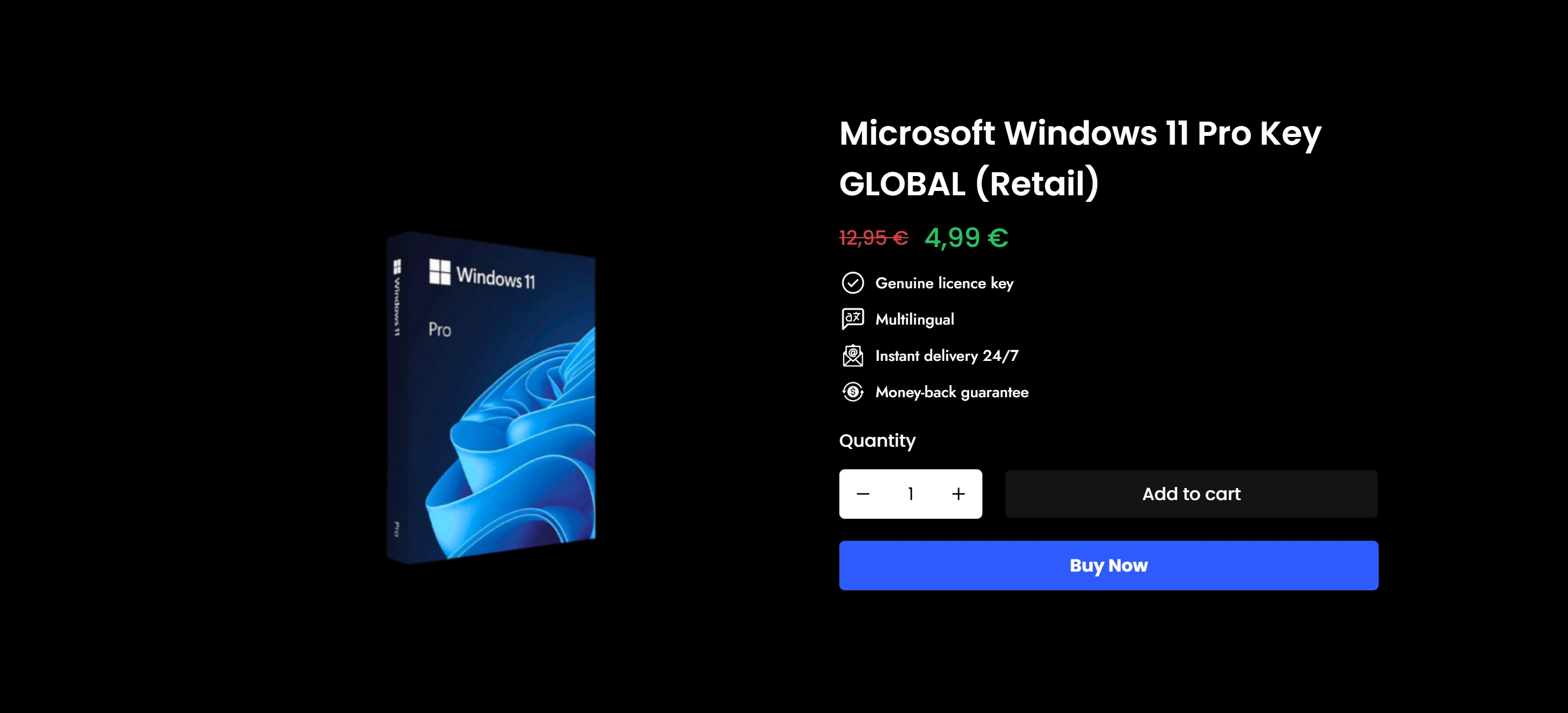
Operacinesistema specializes in genuine Microsoft OS licenses for businesses, IT resellers, and small teams that need official, verified software without the complexity of enterprise volume agreements. Whether you need Windows 10 Pro or Windows 11 Pro, OEM or Retail, Operacinesistema delivers authentic digital keys instantly by email with full support and a refund policy on unopened physical products. Before your next purchase, review the license type comparison to understand exactly which option fits your deployment scenario. Getting the license right the first time saves you from compliance headaches and unnecessary repurchasing costs down the line.
FAQ
What is the first step in buying software for a company?
Define the business problem you need to solve in measurable terms before researching any product. Capterra’s buying framework recommends mapping software features directly to specific business outcomes rather than browsing by category.
How much can structured procurement reduce software costs?
Structured RFQ processes can reduce software spend by 15 to 30 percent through better negotiation and improved license utilization. The savings come from knowing your requirements, tracking usage, and negotiating contract terms before renewal deadlines.
What security certifications should I require from a SaaS vendor?
Require a current SOC 2 Type II report and check its recency, scope, and any auditor exceptions. Also confirm that the vendor supports multi-factor authentication and has a defined data breach notification SLA.
What contract terms are most important to negotiate?
Prioritize auto-renewal notice periods, annual price escalation caps, cancellation rights, and data export provisions. Vendor offboarding clauses should specify clear processes and timelines so you’re never locked in without a defined exit path.
How do I avoid paying for unused software licenses?
Audit seat usage monthly using the vendor’s built-in dashboard or a SaaS management tool, and set renewal reminders 90 days in advance. Right-size your license count at each renewal based on actual active users, not the headcount you projected when you first signed.
Zalecane
- Wskazówki dotyczące zakupu bezpiecznego oprogramowania Microsoft na 2026 r.
- Lista kontrolna licencji na oprogramowanie 2026: przewodnik zgodności dla małych i średnich firm
- Optymalizacja licencjonowania oprogramowania Microsoft: trendy i najlepsze praktyki w 2026 r.
- Customer support tips for buying genuine Microsoft licenses