How to Choose a Software License: 2026 Guide
TL;DR:
- Choosing the correct software license depends on your organization’s goals, such as maximizing adoption or ensuring openness. Permissive licenses like MIT and Apache 2.0 offer broad usage rights, with Apache 2.0 providing explicit patent protection; copyleft licenses like GPL and AGPL guarantee that derivatives stay open source, especially for SaaS deployments. Conducting a dependency audit and clearly defining your licensing objectives are critical steps to ensure legal compliance and align with your business strategy.
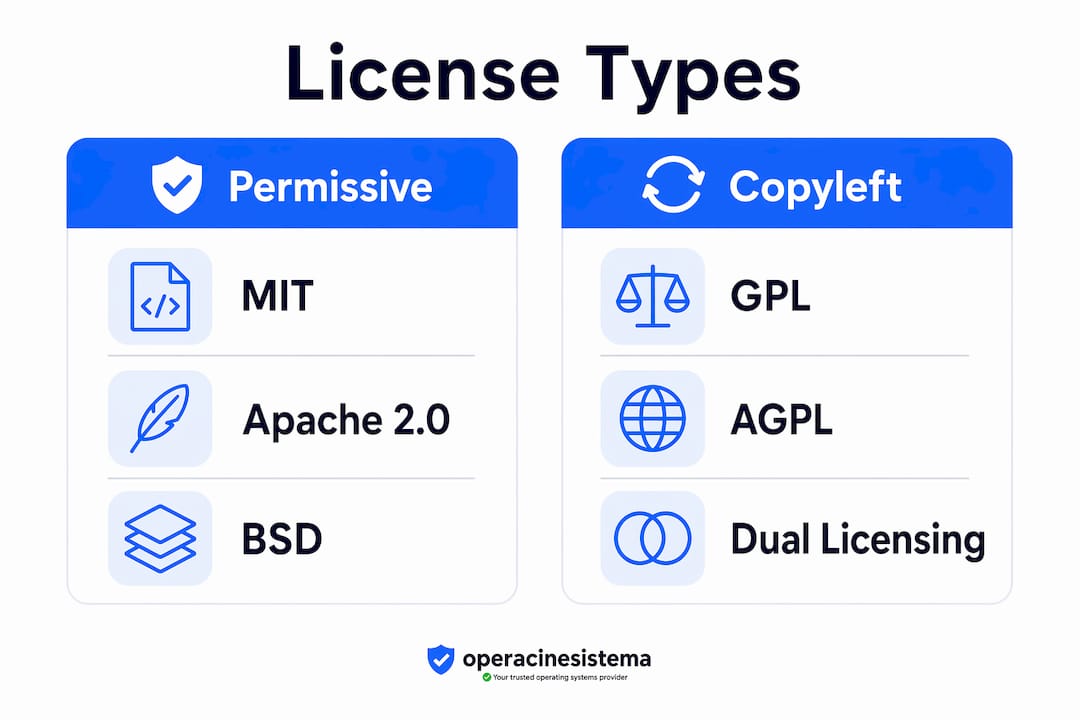
A software license is a legal instrument that defines who can use, modify, and distribute your software and under what conditions. Knowing how to choose software license terms that fit your organization is not optional. The wrong choice can block adoption, expose you to patent litigation, or force you to open source code you intended to keep private. Software licensing in 2026 splits into two primary categories: permissive licenses like MIT, Apache 2.0, and BSD, and copyleft licenses like GPL and AGPL. Each category serves a different business objective. Your job is to match the license to your goals, not the other way around.
What are the main types of software licenses and their business implications?
Permissive and copyleft licenses represent the two ends of the open source spectrum, and understanding them is the first step in selecting software licenses that work for your organization.
Permissive licenses: MIT, Apache 2.0, and BSD
Permissive licenses place minimal restrictions on how others use your software. Anyone can take your code, modify it, and include it in a proprietary product without releasing their changes. MIT is the most widely used permissive license because of its simplicity. Apache 2.0 adds one critical feature MIT lacks: an explicit patent grant.

Apache 2.0 includes patent grants that protect contributors and users from patent litigation. If your project involves patentable technology, Apache 2.0 is the safer choice over MIT. BSD licenses come in two and three clause variants and are functionally similar to MIT, though less common in new projects.
Copyleft licenses: GPL and AGPL
Copyleft licenses require that any derivative work be released under the same license. The GNU General Public License (GPL) is the most recognized copyleft license. It guarantees that modified versions of your software remain open source. This protects community contributions but limits commercial adoption by companies that cannot release their proprietary code.
AGPL v3 closes the SaaS loophole that standard GPL leaves open. Under GPL, a company can run your software on a server without releasing modifications because no distribution occurs. AGPL requires source disclosure even for server-hosted software. This makes AGPL the right choice for projects where SaaS deployment is a concern.
Dual licensing as a revenue strategy
Dual licensing lets companies release software under a copyleft license for the community while selling a proprietary license to commercial users who cannot comply with copyleft terms. This balances community trust with revenue generation. It is a proven model used by database and infrastructure projects worldwide.
| License | Type | Patent Grant | Copyleft | Best For |
|---|---|---|---|---|
| MIT | Permissive | No | No | Maximum adoption, simple projects |
| Apache 2.0 | Permissive | Yes | No | Projects with patentable technology |
| BSD (2/3 clause) | Permissive | No | No | Academic and legacy compatibility |
| GPLv3 | Copyleft | No | Strong | Community projects, guaranteed openness |
| AGPL v3 | Copyleft | No | Network | SaaS products, server-side software |
Pro Tip: If you are unsure between MIT and Apache 2.0, default to Apache 2.0. The patent grant costs you nothing and protects your contributors significantly.
How to align your license choice with organizational goals
There is no universally best license. Choosing the right one is a strategic decision that balances control, community growth, and legal protection. The criteria for software licensing decisions start with one question: what does success look like for this project?
Work through these six alignment questions before you commit to any license:
-
What is your adoption goal? If you want the widest possible use, including by commercial companies, choose a permissive license like MIT or Apache 2.0. Most business projects prefer permissive licenses for risk reduction and broad adoption. Copyleft licenses reduce commercial uptake because they impose obligations many companies cannot accept.
-
Do you need to protect openness? If your goal is to guarantee that all derivatives remain open source, GPL or AGPL is the right choice. Community projects that depend on contributor trust often use GPL to prevent proprietary forks from fragmenting the ecosystem.
-
Does your project include patentable technology? Apache 2.0 is the answer here. Patent protection is an often overlooked factor in license selection. MIT gives users no explicit patent rights, which creates legal uncertainty for enterprise adopters.
-
Will your software run as a hosted service? If yes, standard GPL does not protect you from proprietary SaaS forks. AGPL v3 is the correct license for any project where server-side deployment is the primary distribution model.
-
What do your contributors expect? Contributors to community-driven projects often expect copyleft terms. Switching from GPL to a permissive license after launch damages trust and may require consent from every past contributor.
-
Do you plan to monetize through licensing? Dual licensing works when you have a strong copyleft base and commercial users who need proprietary terms. This model requires clear contributor license agreements (CLAs) so you retain the right to issue commercial licenses.
Pro Tip: Write down your licensing goals in one sentence before you open any license comparison tool. “We want maximum adoption with patent protection” points directly to Apache 2.0. “We want all derivatives to stay open” points to GPLv3. Clarity first, license second.
What are common compatibility, legal, and practical considerations?
License selection does not happen in isolation. Your software almost certainly depends on third-party libraries, frameworks, and tools. Each of those carries its own license, and those licenses constrain your choices.
The dependency audit problem
Failing to audit third-party dependency licenses can legally force your software’s licensing choice. If you include a GPLv3 dependency in your project, your project must also be released under GPLv3 or a compatible license. This is not a technicality. It is a binding legal obligation that has forced companies to open source code they intended to keep proprietary. Run a full dependency audit before you finalize any license decision.
What happens without an explicit license
Without an explicit license file, all rights are reserved by default. This means no one can legally use, copy, or modify your code even if it is publicly visible on GitHub. Many developers assume that public code is free to use. It is not. A repository without a LICENSE file is legally closed source by default.
Why custom licenses are a trap
- Custom licenses are not recognized by enterprise compliance tools. Legal teams at large companies will reject your software outright if it carries a non-standard license.
- OSI-approved licenses cover nearly all needs. The Open Source Initiative approves over 80 licenses, including MIT, Apache 2.0, and GPLv3. One of them fits your situation.
- Custom licenses create legal friction. Every potential user must pay a lawyer to review your custom terms. Most will walk away instead.
- Avoid custom licenses entirely. Non-standard licenses hinder adoption and cause compatibility problems with enterprise compliance workflows.
“The OSI-approved license set comprehensively covers common use cases. Inventing a new license introduces legal complexity without adding protection.”
Check your software licensing best practices to confirm your compliance documentation meets enterprise standards before you publish.
What practical steps should organizations follow to select a license?
A structured process removes guesswork from license selection. Follow these six steps to move from uncertainty to a documented, defensible licensing decision.
-
Define your licensing goals. Write one sentence describing what you want the license to achieve. Reference the alignment questions from the previous section. This sentence becomes your decision filter for every step that follows.
-
Audit your dependencies. List every third-party library, framework, and tool your project uses. Record the license for each one. Identify any copyleft dependencies that could constrain your choice. Tools like FOSSA, Black Duck, and Snyk automate this process for large codebases.
-
Use ChooseALicense.com. GitHub-curated ChooseALicense.com guides license selection with plain-language explanations. For permissive needs, it recommends MIT. For copyleft needs, it recommends GPLv3. The site also covers special cases like no-license and unlicense options.
-
Select a compatible license. Cross-reference your goals, your dependency audit results, and the ChooseALicense.com recommendation. The license you choose must be compatible with all your dependencies. If a conflict exists, you have three options: replace the conflicting dependency, choose a compatible license, or seek a commercial license for the dependency.
-
Implement the license correctly. Add a LICENSE file to the root of your repository. Reference the license in your README. Add SPDX license identifiers to source file headers. Update your package metadata (package.json, setup.py, pom.xml) to include the license field. Adding a clear LICENSE file is the minimum legal requirement to grant usage rights to others.
-
Monitor and revisit. Licenses are not permanent decisions. As your project grows, your goals may shift. New dependencies may introduce compatibility issues. Schedule an annual license review. If you need to change licenses, you must obtain consent from all contributors or use a CLA that grants you relicensing rights.
| Step | Action | Key Tool or Standard |
|---|---|---|
| 1. Define goals | Write a one-sentence licensing objective | Internal strategy document |
| 2. Audit dependencies | List all third-party licenses | FOSSA, Black Duck, Snyk |
| 3. Research options | Use guided selection tools | ChooseALicense.com |
| 4. Select license | Match goals, dependencies, and compliance needs | OSI-approved license list |
| 5. Implement | Add LICENSE file, update metadata and README | SPDX identifiers |
| 6. Monitor | Annual review, CLA management | Legal counsel, compliance tools |
For a detailed compliance checklist tailored to small and medium businesses, the SMB compliance guide covers documentation requirements and audit workflows in practical detail.
Key Takeaways
Selecting the right software license requires matching your license type to your adoption goals, patent needs, SaaS deployment model, and dependency constraints before writing a single line of documentation.
| Point | Details |
|---|---|
| Start with goals, not licenses | Define your adoption and control objectives before evaluating any specific license. |
| Apache 2.0 beats MIT for patents | Apache 2.0 includes explicit patent grants that MIT lacks, protecting enterprise adopters. |
| AGPL covers SaaS deployments | Use AGPL v3 when server-side hosting is the primary distribution model to close the SaaS loophole. |
| Audit dependencies first | Copyleft dependencies can legally force your project’s license choice regardless of your intent. |
| Never skip the LICENSE file | A repository without a LICENSE file is legally closed source by default, even if publicly visible. |
The uncomfortable truth about license selection
Most organizations treat license selection as a checkbox. They pick MIT because everyone else does, or they copy a LICENSE file from another project without reading it. That approach works until it does not. And when it fails, it fails expensively.
The strategic reality is this: your license is a business decision, not a technical one. It determines who can use your software, who will contribute to it, and whether enterprise legal teams will approve it for internal use. A permissive license like Apache 2.0 opens doors with Fortune 500 procurement teams. A copyleft license like AGPL closes those same doors while protecting your community from proprietary forks.
What I have seen consistently is that organizations skip the dependency audit. They choose a permissive license, then discover six months later that a core dependency is GPLv3. At that point, they face a painful choice: replace the dependency, relicense the project, or operate in legal gray territory. None of those options is cheap or fast.
The other mistake is the custom license trap. Teams write their own terms thinking they are protecting themselves. What they are actually doing is making their software invisible to enterprise compliance tools. Legal teams at large companies do not negotiate custom open source terms. They move on to the next option.
My honest recommendation: use ChooseALicense.com, pick an OSI-approved license, run your dependency audit, and get a lawyer to review your CLA before you accept contributions. That process takes a week. Fixing a licensing mistake takes months.
— Jewels by ARES
Precision matters in every craft
At Jewels by ARES, we know that the best decisions come from clarity of purpose and attention to detail. The same discipline that guides a thoughtful software licensing strategy shapes every piece we create. Our diamond string bracelets are built with the same precision you bring to protecting your intellectual property: certified materials, deliberate design, and no shortcuts. Whether you are evaluating licensing frameworks or looking for a gift that carries real meaning, Jewels by ARES offers pieces crafted for those who value quality over convenience. Each bracelet ships worldwide in elegant, gift-ready packaging.
FAQ
What is the difference between permissive and copyleft licenses?
Permissive licenses like MIT and Apache 2.0 allow commercial use and closed-source derivatives with minimal restrictions. Copyleft licenses like GPL and AGPL require all derivative works to be released under the same open source terms.
When should I use Apache 2.0 instead of MIT?
Use Apache 2.0 when your project involves patentable technology. Apache 2.0 includes an explicit patent grant that MIT does not, which provides stronger legal protection for contributors and enterprise users.
What happens if I publish code without a license?
Without an explicit license, all rights are reserved by default. No one can legally use, copy, or modify your code, even if it is publicly available in a repository.
Can I change my software license after release?
Yes, but you need consent from all contributors unless your project uses a Contributor License Agreement (CLA) that grants you relicensing rights. Changing a license retroactively without proper rights is legally risky.
What is the safest way to pick a license quickly?
Use ChooseALicense.com for guided selection, then cross-reference your choice against your dependency audit. Select only from the OSI-approved license list to ensure compatibility with enterprise compliance tools.