What Is Operating System Licensing? A 2026 Guide
संक्षेप में:
- Operating system licensing establishes the legal rights to use, modify, and distribute OS software under specific vendor terms. Choosing the correct license type—proprietary, open source, or subscription—is essential to ensure compliance, security, and support for your needs. Noncompliance risks legal action, software deactivation, and damages your business’s reputation and valuation.
Operating system licensing is a legal agreement that grants specific rights to use, modify, and distribute OS software under defined terms set by the software owner. Every device running Microsoft Windows, macOS, or a Linux distribution operates under one of these agreements, whether the user knows it or not. Understanding what is operating system licensing matters because the wrong license choice can expose you to legal action, software deactivation, or failed compliance audits. This guide breaks down the main license types, what the agreements actually say, and how to choose the right license for your situation.

What is operating system licensing and why does it matter?
Operating system licensing is the legal framework that defines who can use an OS, how they can use it, and what they are prohibited from doing. The license does not transfer ownership of the software. It grants permission to operate the software under specific conditions set by the vendor.

OS licensing models generally fall into three categories: Proprietary, Open Source, and Subscription. Each category carries different obligations, rights, and risks. Choosing the wrong category for your use case is one of the most common and costly mistakes individuals and businesses make.
The importance of OS licensing goes beyond legal formality. A valid license is your proof of authorized use. Without it, you have no right to run the software, receive security updates, or call on vendor support. For businesses, an unlicensed OS is a liability that can surface during procurement checks, financing applications, and mergers and acquisitions due diligence.
What are the main types of operating system licenses?
OS license types divide cleanly into three models, each with distinct rules about what you can and cannot do with the software.
Proprietary licenses
Proprietary licenses, used by Microsoft Windows and Apple macOS, retain all intellectual property rights with the vendor. You purchase the right to use the software, not the software itself. These licenses typically come with End User License Agreements (EULAs) that prohibit reverse engineering, redistribution, and modification of the source code. Hardware restrictions are common too. OEM versions of Windows, for example, are legally tied to the machine they are first activated on and cannot be transferred to a new device.
Open source licenses
Open source licenses, covering Linux distributions like Ubuntu, Debian, and Fedora, grant broad rights to use, modify, and distribute the software. The catch depends on the specific license type. Copyleft licenses such as the GNU General Public License (GPL) require that any derivative work be released under the same terms, including full source code disclosure. Permissive licenses like MIT or Apache 2.0 impose far fewer restrictions and allow proprietary derivatives. Choosing between them matters enormously if you plan to build a product on top of an open source OS.
Subscription licenses
Subscription licenses, used by Red Hat Enterprise Linux (RHEL) and similar enterprise platforms, provide time-bound access to binaries, updates, and support for a recurring fee. When payments lapse, access to updates and support ends and license rights may be lost entirely. This model suits organizations that need guaranteed vendor support and regular security patches but requires active license management to avoid gaps in coverage.
| License type | Key rights | Key restrictions | Example | Redistribution allowed? |
|---|---|---|---|---|
| Proprietary | Use on authorized hardware | No modification, no redistribution | Windows, macOS | नहीं |
| Open Source (Copyleft) | Use, modify, distribute | Derivatives must share source under same terms | Linux (GPL) | Yes, under same license |
| Open Source (Permissive) | Use, modify, distribute freely | Attribution required | Ubuntu (MIT components) | Yes, including proprietary |
| Subscription | Use binaries and support | Time-bound, lapses on non-renewal | Red Hat Enterprise Linux | नहीं |
प्रो टिप: If you are building a commercial product on a Linux base, audit every component’s license before shipping. A single GPL-licensed library can trigger copyleft obligations across your entire codebase.
Why does OS licensing compliance matter for your business?
License compliance is not a checkbox exercise. Noncompliance with OS license terms can lead to automatic revocation of rights or legal action, turning continued use of the software into active copyright infringement. That is a serious exposure for any organization.
The business risks extend well beyond legal fees. Noncompliance risks include penalties, software deactivation, security vulnerabilities, and reduced market valuation. A company discovered running unlicensed software during an M&A transaction can see deal terms renegotiated or the deal collapse entirely.
For regulated industries, the stakes are even higher. Security frameworks like SOC 2 and ISO/IEC 27001 require demonstrable control over software assets. An unlicensed OS fails that control requirement immediately. Auditors and procurement teams now routinely check license compliance as part of vendor qualification.
चेतावनी: Open source license violations can jeopardize entire product lines and impact company valuation. Compliance is a strategic business concern, not just a legal formality.
The challenge has grown with modern infrastructure. In containerized environments, license compliance must extend to base images and all embedded components. A container built on a GPL-licensed base image that ships as part of a proprietary product creates a copyleft contamination risk that many development teams do not catch until it is too late.
प्रो टिप: Treat OS license compliance as an ongoing operational practice, similar to patch management. Schedule quarterly license audits and track every OS component in your software bill of materials (SBOM).
The benefits of OS licensing compliance are equally concrete. You get uninterrupted access to security patches, vendor support, and software updates. You pass audits cleanly. You protect your company’s reputation and market value. For individuals, a genuine license means your activation key will not be blocked after a Microsoft validation check.
How do operating system license agreements work?
An operating system license agreement is a legal contract between the software vendor and the end user. It defines exactly what rights you receive and what you are prohibited from doing. Most people click through these agreements without reading them. That is a risk worth understanding.
License agreements typically include the following core elements:
- Rights granted. The agreement specifies whether you can execute, copy, modify, redistribute, or sublicense the software. Proprietary licenses grant execution rights only. Open source licenses grant broader rights depending on the specific license type.
- Restrictions. Proprietary licenses commonly prohibit reverse engineering, decompilation, and use on unauthorized hardware. Volume license agreements may cap the number of installations or CPU cores covered.
- Copyleft obligations. Open source agreements using GPL terms require that any distributed derivative work include the full source code under the same license. This applies to Linux kernel modifications and any software that links against GPL libraries.
- Subscription terms. Subscription-based agreements specify the renewal schedule, what happens to your rights if you do not renew, and what support services are included during the active period.
- Transferability rules. This is where many buyers get caught out. OEM licenses are typically single-use and non-transferable. Retail licenses can usually be moved to a new machine. Volume licenses support multiple installations with centralized management tools.
Retail, OEM, and volume licensing offer different rights and transferability conditions, and understanding these differences before you buy prevents expensive mistakes later.
| License model | Transferable? | Installations | के लिए सर्वोत्तम |
|---|---|---|---|
| खुदरा | हाँ | One at a time | Individuals, upgrades |
| ओईएम | नहीं | One device only | New PC builders, system integrators |
| Volume (MAK/KMS) | केंद्रीय रूप से प्रबंधित | Multiple | Businesses, IT departments |
| Subscription (e.g., RHEL) | No (tied to subscription) | Per subscription terms | Enterprise, cloud workloads |
Understanding these distinctions protects you from buying a license that does not fit your actual use case. An OEM Windows key purchased for a laptop you plan to replace in 18 months is money you cannot recover when you upgrade.
How to choose and purchase the right OS license
Choosing the right OS license starts with an honest assessment of how you will use the software. The questions below cut through the confusion quickly.
Assess your usage type first. Personal use on a single home PC points toward a retail license for flexibility or an OEM license for cost savings. A small business running five workstations needs either five individual licenses or a volume agreement. An enterprise deploying hundreds of machines across multiple locations needs centralized volume licensing with a Software Asset Management (SAM) tool to track compliance.
Match the license to your compliance requirements. If your business operates under SOC 2, ISO/IEC 27001, or HIPAA, you need licenses that come with documented proof of authenticity. Retail and volume licenses from authorized resellers provide this. Grey-market keys from unverified sources do not. You can review the key factors for choosing an OS license to map your specific requirements before purchasing.
Buy from verified sources only. This is non-negotiable. Counterfeit and recycled license keys are common online. A fake Windows key may activate your machine initially but will fail Microsoft’s validation checks and get blocked. You lose the software, the money, and potentially your data if the key came bundled with malware. Trusted sources include Microsoft directly, authorized resellers, and platforms like Operacinesistema that specialize in genuine OEM and retail Windows licenses with documented authenticity.
Here is a practical checklist before you buy:
- ✅ Confirm whether you need a retail, OEM, or volume license
- ✅ Check that the seller provides proof of authenticity and a refund policy
- ✅ Verify the license covers your intended use (personal, commercial, or enterprise)
- ✅ Confirm transferability if you plan to move the license to a new device
- ✅ For businesses, check that the license supports your audit and compliance requirements
Consider upgrades and future transfers. If you buy a new PC every two to three years, a retail license pays for itself in flexibility. OEM licenses save money upfront but lock you to one machine permanently. For businesses planning hardware refreshes, volume agreements with Microsoft’s Software Assurance program include upgrade rights that reduce total cost of ownership over time.
प्रो टिप: Before purchasing any Windows license, use the secure buying guide from Operacinesistema to verify the seller’s credentials and confirm the key type matches your hardware setup.
मुख्य बातें
Operating system licensing defines your legal right to use OS software, and choosing the wrong license type or source creates real financial, legal, and security exposure.
| बिंदु | विवरण |
|---|---|
| Three core license types | Proprietary, open source, and subscription models each carry distinct rights and obligations. |
| Compliance is operational | Treat license audits like patch management: schedule them regularly and track every component. |
| OEM vs. retail matters | OEM licenses are non-transferable; retail licenses move with you to new hardware. |
| Noncompliance has real costs | Violations can trigger license revocation, legal action, and reduced business valuation. |
| Buy from verified sources | Counterfeit keys get blocked by Microsoft validation and offer no legal protection. |
Why OS licensing is more complex than most people realize
I have spent years watching individuals and businesses treat OS licensing as a one-time purchase decision. Buy the key, activate the machine, move on. That mindset works fine until it does not.
The part that catches most people off guard is not the proprietary side. Microsoft’s rules for Windows are well-documented and relatively straightforward once you understand the OEM versus retail distinction. The real complexity lives in open source and hybrid environments. I have seen development teams build entire products on Linux-based container images without ever checking whether the base image components carry GPL obligations. By the time legal flags it during a funding round or acquisition, unwinding the problem is expensive and time-consuming.
For small businesses, the most common mistake is buying OEM keys for machines they plan to upgrade. They save $30 upfront and then discover the license is worthless when they replace the hardware. A retail license costs more initially but transfers cleanly. Over a three-year hardware cycle, the math usually favors retail.
The other thing I would push back on is the idea that open source means free of licensing obligations. Ubuntu, Debian, and Fedora are free to download and use. But the moment you modify and distribute them, or build a commercial product on top of them, you are operating inside a legal framework with real teeth. The software licensing best practices that experienced IT teams follow exist precisely because these obligations are easy to miss and hard to fix retroactively.
My honest advice: read the license agreement for any OS you deploy commercially. It takes 20 minutes and can save you from a problem that takes months and significant legal fees to resolve.
— Danielius
Get your genuine Windows license from Operacinesistema
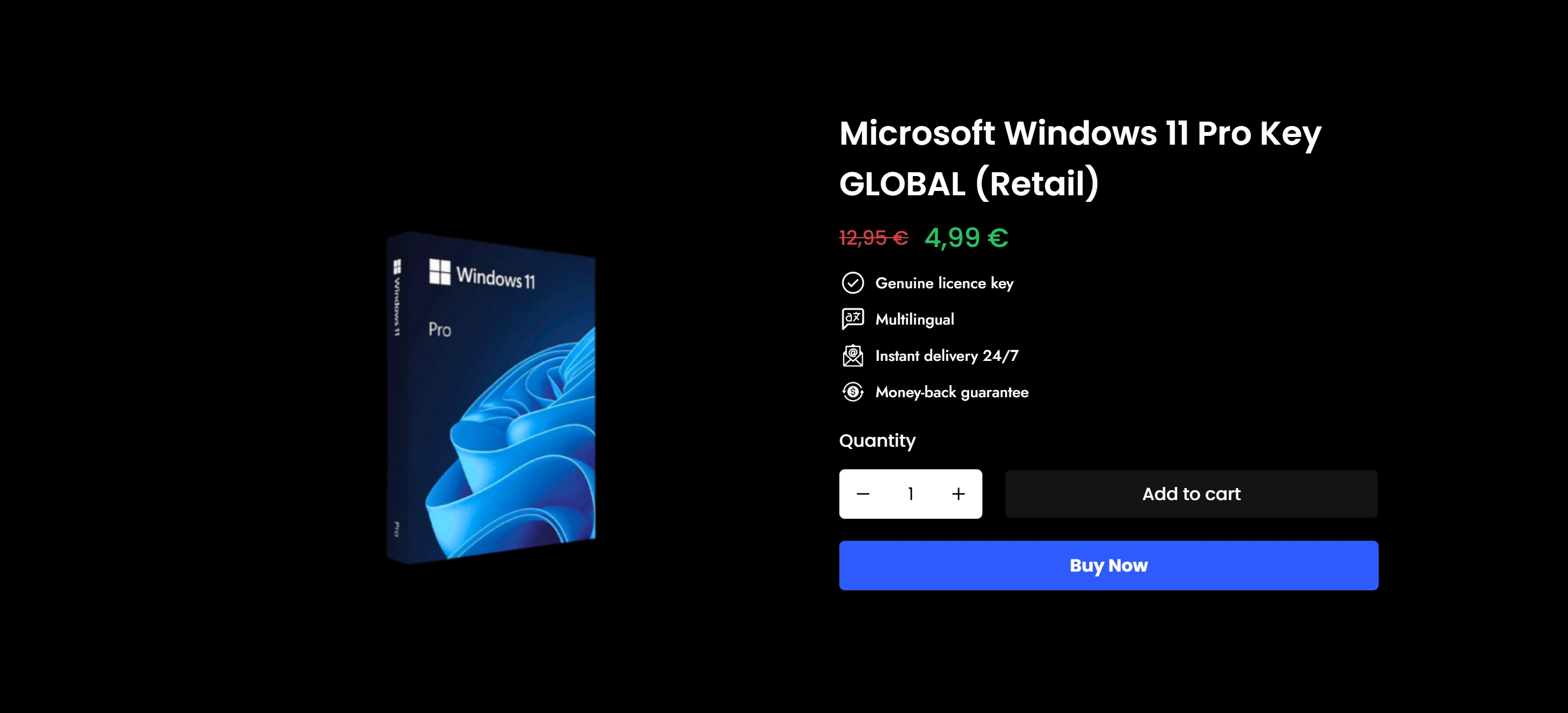
If you need a genuine Windows license for personal use or your business, Operacinesistema offers verified OEM and retail Windows 10 and Windows 11 Pro keys with instant email delivery and a documented refund policy. Every key is authentic, activation-guaranteed, and backed by customer support. Not sure which license type fits your situation? Start with the Windows license checklist built specifically for individuals and SMBs. It walks you through the exact questions you need to answer before buying, so you get the right license the first time. No fake keys. No blocked activations. Just a clean, legal Windows installation you can rely on.
अक्सर पूछे जाने वाले प्रश्न
What is operating system licensing in simple terms?
Operating system licensing is a legal agreement that gives you the right to use OS software under specific conditions set by the vendor. Without a valid license, using the software is copyright infringement.
What are the main operating system licensing types?
The three main types are proprietary (Windows, macOS), open source (Linux distributions), and subscription (Red Hat Enterprise Linux). Each type defines different rights for use, modification, and redistribution.
What happens if you violate an OS license agreement?
Noncompliance can trigger automatic revocation of your usage rights, making continued use active copyright infringement. Businesses also face financial penalties, software deactivation, and damage to their market valuation.
What is the difference between OEM and retail OS licenses?
OEM licenses are single-use and non-transferable, tied permanently to the first machine they activate on. Retail licenses can be transferred to a new device, making them the better choice if you upgrade hardware regularly.
How do I know if an OS license I purchased is genuine?
A genuine license comes with documented proof of authenticity from an authorized reseller and activates cleanly through the vendor’s official validation system. Keys from unverified sources often fail Microsoft’s validation checks and get permanently blocked.