Top 6 Keygen.sh Alternatives for Microsoft Windows Licenses in 2026
Finding secure Microsoft Windows license sources without high prices or slow delivery is tough in 2026. Most cheap key providers either sell unofficial keys prone to blocking or require large minimum volumes and do not support instant email delivery. This comparison covers price, license validity, and activation convenience across six alternatives so you can pick a source that matches your rollout needs.
Table of Contents
- operacinesistema.lt
- Keygen
- LicenseSpring
- 10Duke Licensing
- SLASCONE
- Nalpeiron Growth Platform
- Comparison of alternatives
operacinesistema.lt
At a Glance
Windows 11 Pro keys from €5.68. Operacinesistema.lt advertises instant email delivery of digital keys alongside USB installation media. That approach aims to give IT teams and individual buyers quick access to valid activation keys while keeping costs low.
Core Features
Operacinesistema.lt sells official Microsoft licences for Windows 10 and Windows 11, including both digital keys and USB installation media. The store lists lifetime validity for its licenses and supports all regions and languages, which helps multinational deployments and multilingual machines. The site also provides guides, activation tools, customer support, and options for OEM and retail license types.
Key Differentiator
The one distinct element is the combination of low entry prices and immediate key delivery for digital purchases. That pairing reduces the wait between purchase and activation. The seller also backs purchases with customer support and documentation aimed at activation and validation.
Pros
Operacinesistema.lt focuses on genuine Microsoft operating system licenses, so you get official keys rather than gray market variants. Instant email delivery of keys speeds up new installs and device rollouts for small teams. The inclusion of USB installation media covers cases where network installs are not practical. Support materials and activation guides lower the technical barrier for less experienced installers. Pricing shown for key items undercuts typical retail channel costs for individual license purchases.
Cons
- Limited to Microsoft operating systems and Microsoft 365 related products, so you cannot source non Microsoft software from this retailer.
Who It's For
You if you are an IT professional, a small or medium business owner, or a tech enthusiast who needs legitimate Windows licenses at lower cost. The site suits resellers and procurement leads who manage multi seat activations and prefer instant digital delivery. It also works for buyers in Lithuania and nearby regions who want language and regional compatibility.
Unique Value Proposition
Instant email delivery of OEM and retail keys paired with optional physical USB media lets you complete both small and bulk deployments faster. That combination can cut downtime when you need to activate multiple machines the same day. The economic result is lower per license cost for immediate use without relying on retail boxed purchases.
Real World Use Case
A small business buys a batch of Windows 10 licenses and receives product keys by email. The office IT lead mounts the USB installer on a few machines and activates each using the emailed keys. The business completes setup the same day and records license details for compliance and future audits.
Pricing
Prices vary by product and license type. The site lists Windows 11 Pro keys from €5.68 and USB installation media around €70. Subscription options, bulk pricing, and occasional discounts may apply depending on the item and order size.
Website: https://operacinesistema.lt
Keygen
At a Glance
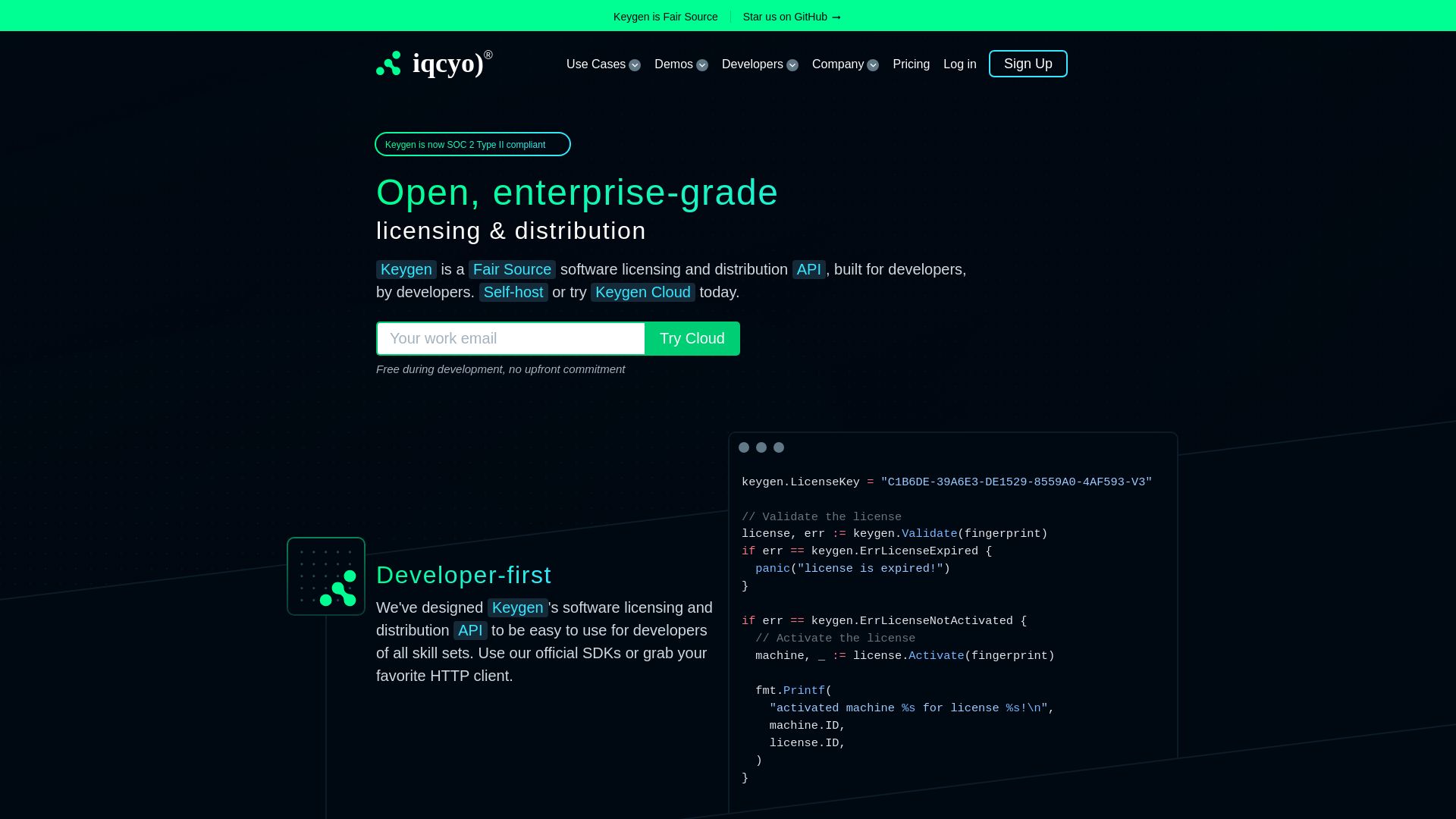
$299/month is the entry price for 10,000 Active Licensed Users (ALUs). A free community edition supports self hosting for teams that want local control. That pricing makes Keygen practical for vendors who need large seat blocks.
Core Features
According to the company, Keygen includes SOC 2 Type II compliance features. It exposes a developer friendly API plus SDKs for major languages and platforms, and it manages license validation, activation, and policy enforcement. The platform also handles secure artifact delivery and automatic updates, and it supports both cloud deployment and self hosting.
Key Differentiator
Keygen pairs open source and fair source licensing with enterprise grade features and flexible deployment options. That mix lets developers audit the code and run a local license server while keeping centralized controls like SAML and audit logs. The combination suits teams that want source transparency without losing enterprise management capabilities.
Pros
Keygen reports being trusted by thousands, including large enterprises and startups. That figure signals the product can scale beyond early stage projects. The open code base and free community edition lower the barrier for testing and local staging. A rich API and SDK ecosystem speeds integration into CI pipelines and release tooling, and enterprise features add SAML, audit logs, and custom environments.
Cons
-
Complex setup for self hosting. Running the local edition requires operational work and configuration time.
-
Pricing may be heavy for very small projects or solo developers. The entry tier targets vendors who need thousands of licensed users.
-
Advanced enterprise capabilities require higher tier plans. Custom integrations and dedicated support add to cost and procurement time.
When It May Not Fit
Solo developers or hobby projects that need only a handful of licenses will find the paid tiers expensive. Teams with no ops capacity may struggle with the self hosting install and maintenance. Organizations that need only a simple, free key generator will likely prefer a lighter tool.
Who It's For
Developers and software vendors who need flexible, secure license management with cloud or local deployment will find this product relevant. You should have engineering resources to integrate the API and handle deployment if you choose self hosting. Teams requiring SAML and audit trails will get the most value from paid tiers.
Real World Use Case
A SaaS company uses Keygen’s API to manage license keys, device activations, and entitlements for a desktop application. They integrate the API with their payment processor and expose a customer licensing portal. The team runs the license server in the cloud and retains audit logs for customer support and compliance.
Pricing
Pricing starts at $299/month for 10,000 Active Licensed Users (ALUs). A free community edition is available for self hosting and local development. Larger volumes and enterprise features are available on higher tiers and add cost.
Website: https://keygen.sh
LicenseSpring
At a Glance
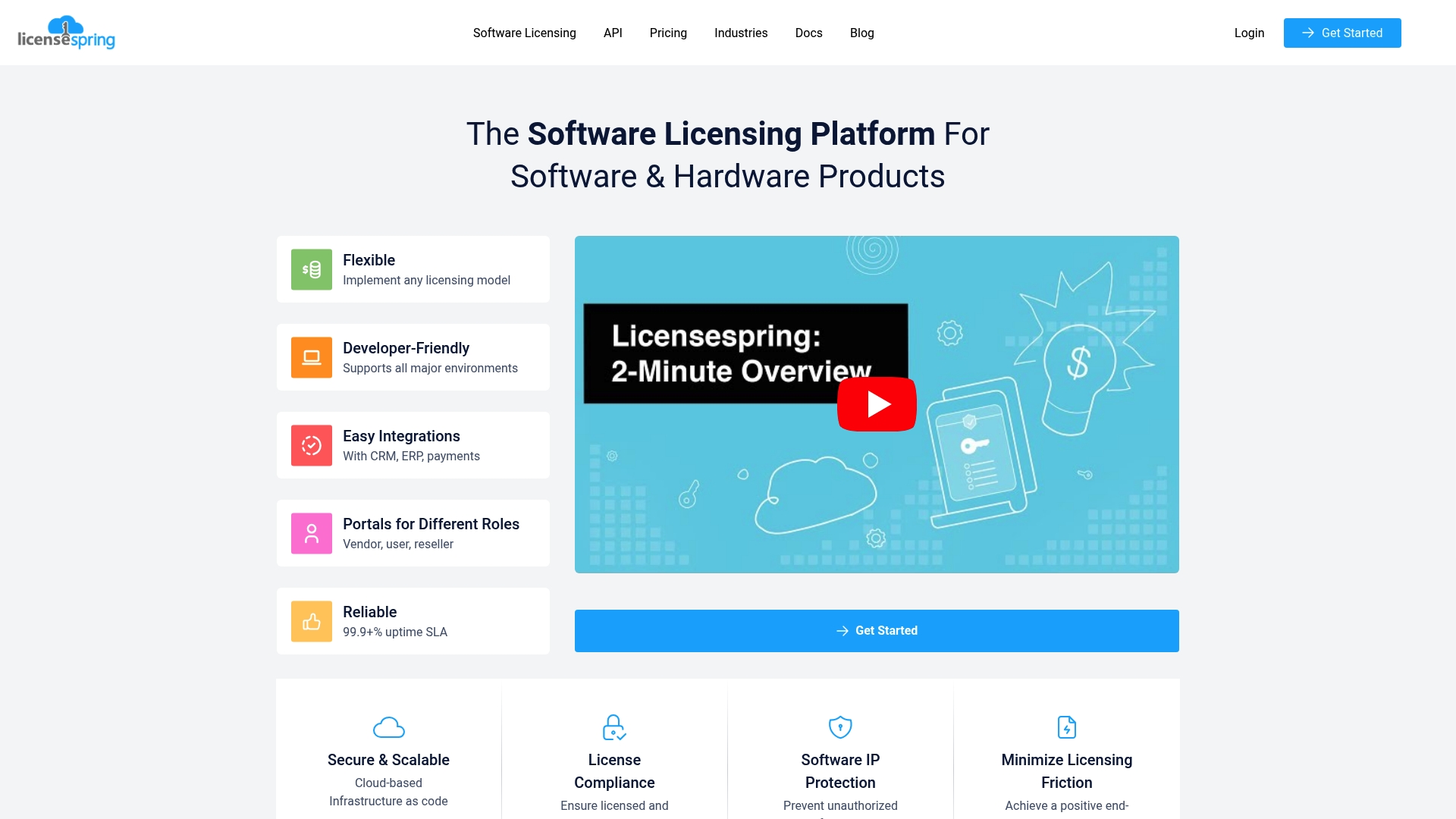
LicenseSpring’s marketing materials state a 99.9+% uptime SLA and ISO27001 plus GDPR security claims. This combination appeals to vendors who need reliable license delivery and regulatory controls. The platform targets developer teams that require flexible license models and cross platform SDKs.
Core Features
LicenseSpring supports flexible licensing models including perpetual, time limited, subscription, node locked, floating, and usage metering. Its developer tools include SDKs for C++, .NET, Java, Python, Swift, Node.js, and Go, and the SDKs simplify embedding license checks. Comprehensive APIs cover activation, validation, entitlement configuration, usage tracking, and role based portals for vendors, resellers, and customers.
Key Differentiator
What sets LicenseSpring apart is the breadth of its developer tooling and environment coverage. The SDKs plus APIs let you implement license enforcement in native applications, cloud services, and embedded devices. That level of customization supports complex packaging, bundling, and feature monetization workflows that many simpler license gateways cannot match.
Pros
High flexibility in licensing models and strong SDK support reduce integration friction for multi platform products. Offline activation and verification support helps hardware vendors and distributors that operate with intermittent connectivity. Portals for vendors, resellers, and end customers combined with API automation simplify entitlement workflows, and that uptime claim supports expectations for production deployments.
Cons
-
Initial setup and configuration can feel complex for teams without dedicated integration resources.
-
Pricing details are not publicly explicit, making cost estimation difficult for small startups.
-
Public information on advanced real time usage analytics and reporting appears limited.
When It May Not Fit
If your team lacks engineering bandwidth to handle a feature rich integration, a lighter licensing tool may be a better fit. Very small scale applications or early stage startups may find the pricing model prohibitive. Teams that only need simple single feature keys or basic activation will get faster results from simpler providers.
Notable Integrations
LicenseSpring lists native integrations with major sales and commerce systems. These connections simplify entitlement workflows and billing automation.
-
Salesforce
-
Hubspot
-
Stripe
-
FastSpring
-
Shopify
Who It's For
Vendors of software and hardware products who need flexible, customizable license enforcement and management will benefit most. Development teams shipping cross platform desktop, mobile, and embedded products will find the SDKs useful. Organizations that require offline activation and complex entitlement packaging get the most value.
Real World Use Case
A game development studio enforces entitlements across multiple gaming platforms while allowing license sharing and offline activation for players. The team ties entitlements to recurring billing and uses the SDKs to embed checks in native code. This setup lets the studio control access without forcing constant online validation.
Pricing
Pricing is not publicly listed and typically requires a custom quote based on licensing volume and feature requirements. Expect a procurement conversation for larger deployments rather than a single published price. Small projects should plan for variable costs tied to usage and integration needs.
Website: https://licensespring.com
10Duke Licensing
At a Glance
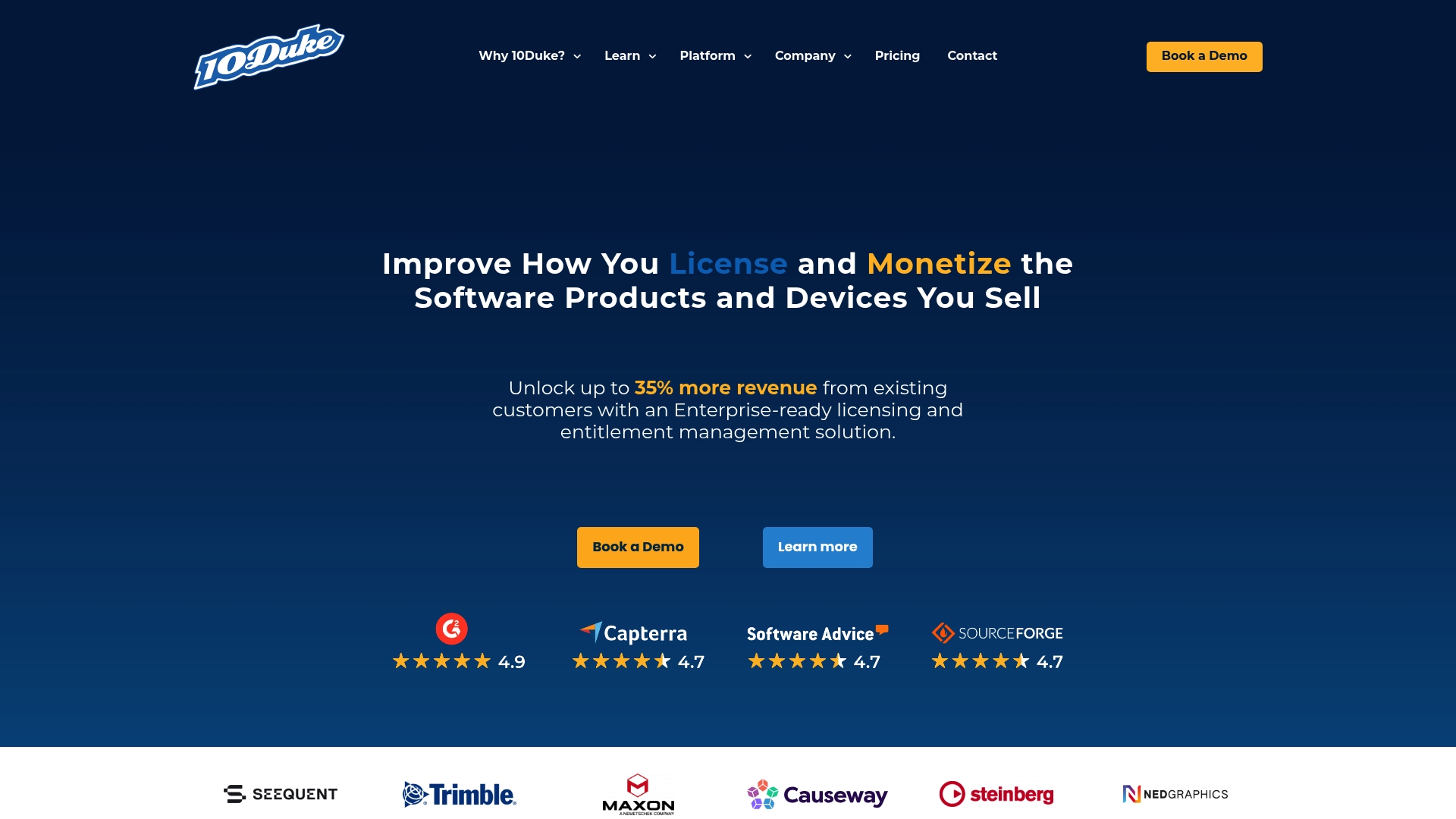
10Duke’s marketing materials state it is the only platform to combine user authentication and licensing in a cloud native, scalable solution. That claim ties single sign on and two factor authentication directly to entitlement controls. The result targets large software vendors and device manufacturers that need centralized access and license control.
Core Features
The platform unifies licensing and user authentication so account identity and entitlement live in the same workflow. It offers native integrations with CRM and e commerce providers and delivers real time license usage insights for operational decisions. Identity management includes single sign on and two factor authentication while the system supports multiple licensing models such as perpetual, subscription, and floating.
Key Differentiator
That positioning links identity and entitlement without a separate licensing service. This design lets teams change access at the account level without reissuing license keys. The tight link reduces administrative steps when managing both software and device licenses at scale.
Pros
The vendor states SOC 2 Type II compliance for security controls. 10Duke reports a highly scalable cloud based architecture that suits enterprise deployment and peak loads. It integrates with major billing and CRM systems so you can push license events into existing commerce flows. The platform also exposes real time analytics which helps teams spot usage trends and adjust licensing strategies quickly.
Cons
- Heavy focus on licensing. The documentation and marketing concentrate on entitlement features, with limited information about adjacent capabilities.
- Pricing requires direct contact. No transparent tiered pricing appears on the site.
- Customer reviews are not prominently displayed, so public social proof is limited.
- Primarily aimed at large enterprises, which may make the platform complex for small teams.
When It May Not Fit
Small companies that need out of the box, low cost license management will likely find the platform oversized. Organizations that require clear self serve pricing will face friction because sales contact is required for quotes. Teams that prioritize public customer reviews to validate fit may prefer vendors with more visible references.
Notable Integrations
- Salesforce
- FastSpring
- Stripe
- e commerce platforms
- CRM systems
Who It's For
Large software vendors and device manufacturers seeking enterprise grade licensing and identity management will get the most value. Teams that run region aware entitlements or hardware enabled licensing will find the combined identity and license model useful. Companies that already use Salesforce or Stripe benefit from the native connectors.
Real World Use Case
A SaaS provider integrates 10Duke to control user access and enforce license tiers by account. The company links usage metrics into billing through FastSpring and Stripe to automate upgrades. License and identity data feed a single view that helps the team spot churn drivers and adjust entitlements.
Pricing
Pricing is not published on the site. Prospective customers must contact sales for a custom quote and deployment details. The public information emphasizes enterprise engagements rather than fixed self serve tiers.
Website: https://10duke.com
SLASCONE
At a Glance
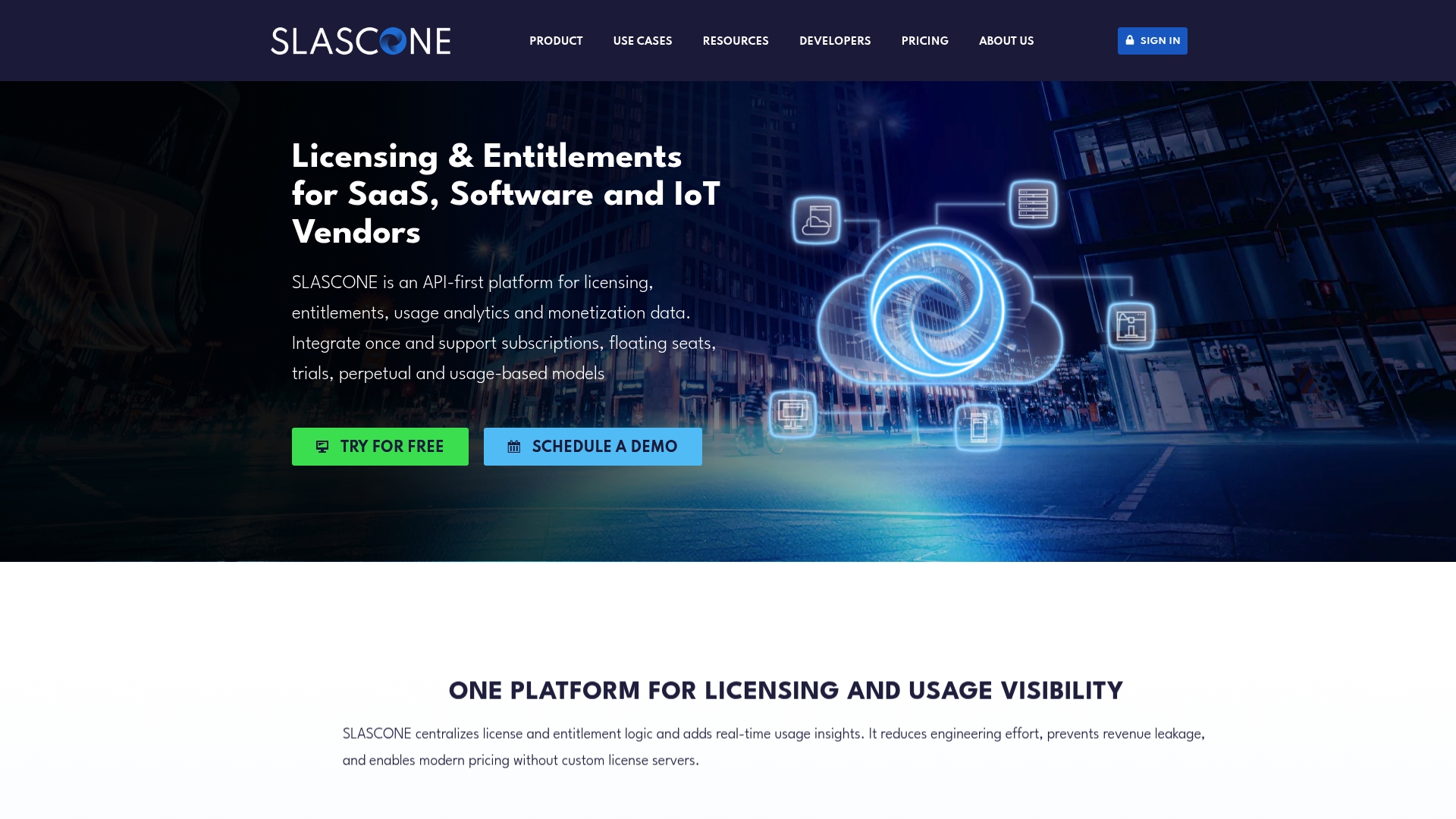
The vendor states SLASCONE is ISO 27001 and GDPR compliant and runs on Microsoft Azure. It targets license and entitlement control for software, SaaS, and IoT. The platform advertises flexible licensing models including subscriptions, floating licenses, trials, perpetual, and usage based billing.
Core Features
SLASCONE centralizes license and entitlement management and delivers real-time usage analytics and dashboards for product teams. It supports online and offline activation and flexible licensing models that cover subscriptions, trials, perpetual, and usage based billing. The platform exposes an API first approach for integrations and real time entitlement updates without reissuing keys.
Key Differentiator
SLASCONE focuses on delivering licensing control through APIs rather than custom license servers. That approach lets engineering teams push entitlement changes in real time without regenerating keys. The vendor pairs that model with enterprise security and cloud scale to reduce engineering overhead for complex product portfolios.
Pros
The vendor advertises 99.95% availability for the platform. That uptime claim supports customers who need reliable license checks and reporting. SLASCONE lists enterprise security and compliance with ISO 27001 and GDPR and offers scale on Microsoft Azure. Integrations use REST API and Webhooks, which simplifies connections to ERP and CRM systems and to billing or distribution systems.
Cons
-
Dependence on cloud infrastructure may not suit organizations requiring full on premises control.
-
Pricing is seat based and varies by edition, which may constrain very small teams or very large deployments.
-
Complex licensing setups can require dedicated technical resources to implement and operate.
When It May Not Fit
If your compliance rules mandate on premises only deployments, this cloud dependent product could be a poor fit. If you lack developer resources to wire APIs and webhooks, integration overhead will be significant. If you need a very simple license key product without entitlements or telemetry, this platform is more than required.
Notable Integrations
-
ERP and CRM systems via REST API and webhooks.
-
Microsoft Azure for hosting and platform services.
-
Third party payment and distribution systems for billing and delivery.
Who It's For
SLASCONE fits mid to large software vendors and SaaS companies that need secure, scalable license and entitlement management. It suits teams that can dedicate engineering time to API integrations. It also serves IoT device manufacturers that require feature control and usage telemetry.
Real World Use Case
A SaaS company integrates SLASCONE APIs to gate premium features by entitlement and to record usage for billing. The company monitors dashboards for license violations and adjusts plans based on real time telemetry. This reduces revenue leakage from misapplied entitlements and simplifies migration between plans.
Pricing
Options start at 200 €/month for a basic edition. Higher tiers are available as Silver, Gold, and Enterprise with larger capacity and support. Pricing uses seat counts and edition levels, so total cost depends on scale and required features.
Website: https://slascone.com
Nalpeiron Growth Platform
At a Glance
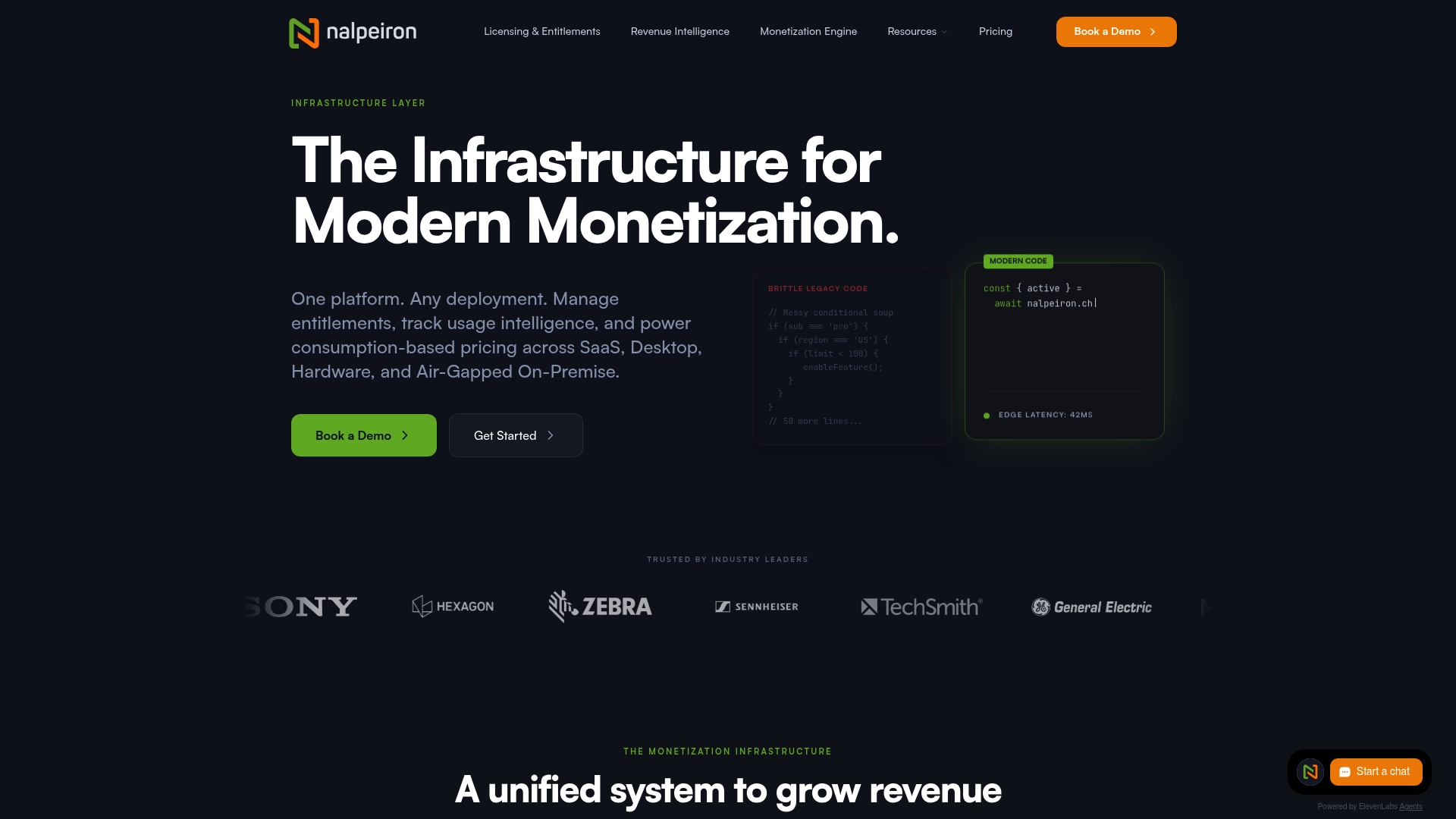
SMB plans start at $600/month, which places this platform in the buyer tier above hobbyist tools. The product targets licensing for SaaS, desktop, hardware, and air gapped deployments while adding real time telemetry for AI and software. That combination suits teams moving from fixed pricing to consumption based billing.
Core Features
Nalpeiron delivers licensing and entitlement management across common license models and deployment types, with APIs for automation. It offers real time telemetry and usage tracking tailored for AI token metering and inference tracking. The platform also includes consumption based and hybrid billing tools plus data sovereignty options in the US and Europe.
Key Differentiator
Nalpeiron’s standout is its AI native metering infrastructure that handles token level usage and ties that telemetry to billing. That design supports consumption based and hybrid pricing across SaaS, desktop, and air gapped products. Teams that need per inference billing or mixed license models will find that capability central.
Pros
The vendor advertises SOC 2 and GDPR compliance, which signals attention to security and regional privacy. The platform pairs a comprehensive API with responsive support, making integrations and automation practical for engineering teams. Global infrastructure and data sovereignty options help with multi region deployments, and built in connectors reduce custom work for billing and CRM systems.
Cons
- Complex feature set may require a dedicated technical resource for proper configuration and testing.
- Premium enterprise features and support come with higher costs, which can be restrictive for smaller teams.
- Documentation for advanced scenarios can feel thin, increasing the need for vendor or consultant help.
When It May Not Fit
Teams with simple, single license models and minimal tooling will likely overpay for features they do not use. Small startups with tight budgets may prefer a lower cost licensing gateway while they validate product market fit. Organizations that lack engineering capacity for a multi week onboarding should plan for a phased rollout or outside assistance.
Notable Integrations
- Salesforce for sales and account workflow alignment.
- HubSpot for marketing and lead linkage.
- NetSuite and Zuora for finance and subscription billing.
- Stripe and FastSpring for payment processing.
- Power BI for telemetry reporting and dashboards.
Who It's For
Mid to large software and AI product teams that need flexible, secure licensing and monetization at scale. Product and finance owners who plan to test consumption based pricing or token metering will gain the most. Enterprise teams with regional compliance needs will use the platform to centralize license operations.
Real World Use Case
A SaaS vendor converted fixed seat licenses to per inference billing for an AI feature. Nalpeiron captured token level usage, applied dynamic pricing rules, and routed billing through the vendor’s finance system. The vendor retained compliance with regional data laws while launching global pricing experiments.
Pricing
Pricing varies by deployment size and feature set. SMB plans start at $600/month, while enterprise plans use custom pricing based on scale and required features.
Website: https://nalpeiron.com
Comparison of alternatives
When examining diverse providers for software licensing needs, selection depends on balancing cost, usability, and available features. Below, key differentiators among six top solutions are analyzed.
Pricing and Initial Costs
Operacinesistema.lt offers Microsoft Windows licenses starting at only €5.68, providing exceptional affordability without compromising authenticity, making it highly suitable for small businesses or individual users.
Keygen’s pricing starts higher at $299/month for 10,000 ALUs, delivering extensive SDKs and support aimed at enterprise deployments, validating its higher cost for scaling needs.
Feature Set and Flexibility
Keygen and LicenseSpring provide extensive developer APIs and SDKs, enabling tailored licensing mechanisms. These platforms are crucial for vendors who require scalable user management within complex ecosystems. SLASCONE focuses on cloud-based flexibility, with integrations supporting ERP workflows.
Best fit
- Seeking cost-effective Microsoft Windows licenses for immediate IT deployment with official validation.
- Managing expansive multi-seat license infrastructures or heavy software integrations, favoring developer-oriented solutions.
- Requiring APIs and SDKs for building uniquely adapted licensing ecosystems.
- Embedding licensing within hardware solutions that necessitate secure offline workflows.
- Prioritizing GDPR compliant operations within their licensing strategy.
Our pick
For cost-effective procurement of genuine Windows licenses, operacinesistema.lt offers a distinctive advantage with its combination of affordability, lifetime validity, and fast digital delivery. This makes it the preferred choice for individuals or teams requiring efficient implementation without a premium entry cost.
This comparison focuses on fast access, straightforward setups, and pricing transparency.
| Product | Core Feature | Key Differentiator | Best For | Pricing | Notable Limitation |
|---|---|---|---|---|---|
| Operational system | Official Microsoft OS Licenses | Instant email delivery | Individual and IT buyers | Windows 11 Pro keys from €5.68 | Limited to Microsoft-related products |
| Keygen | License validation management | SOC 2 Type II compliance | Developers requiring enterprise license tools | Starts at $299/month for 10,000 ALUs | Self-hosting setup complexity for non-technical users |
| LicenseSpring | Flexible licensing models | Developer tools SDKs | Vendors and teams across platforms | Price not published | Initial configuration complexity |
| 10Duke Licensing | User authentication and entitlement | Combined identity/license management | Large software vendors and manufacturers | Price not published | Focused primarily on licensing features |
| SLASCONE | Flexible API-first licensing | Real-time entitlement updates | SaaS, software vendors, IoT | Starts at 200 €/month | Reliance on cloud infrastructure |
| Nalpeiron Growth Platform | AI-native license metering | Token-level usage tracking | SaaS, software, AI product teams | Starts at $600/month | Higher costs for premium features and integrations |
Why Choose Operacinesistema Over Other Keygen.sh Alternatives
Many IT professionals, small business owners, and tech enthusiasts struggle with unreliable license keys that lead to blocked activations and security risks. Operacinesistema solves these problems by offering 100% official Microsoft Windows 10 and Windows 11 Pro digital keys with instant email delivery and optional USB installation media. You get real, valid licenses without the wait or risk of illegitimate sources.
Operacinesistema offers:
- Genuine OEM and retail licenses with lifetime validity
- Fast delivery to keep your projects on schedule
- Dedicated customer support and refund policies for unopened products
Make your next Microsoft license purchase safe and hassle-free. Visit Operacinesistema checkout now and activate your devices the same day with official keys.
FAQ
What makes Operacinesistema a good option for Windows licenses?
Operacinesistema provides genuine Microsoft licenses with lifetime validity, allowing for reliable activation of Windows operating systems. The site supports all regions and languages, catering to multinational deployments. Users seeking official Windows keys at lower prices will find this platform valuable.
How does Operacinesistema compare to LicenseSpring?
LicenseSpring offers a broad range of flexible licensing models and strong SDK support, which can be beneficial for software vendors needing complex licensing solutions. Operacinesistema is more suitable for small to medium businesses that need straightforward Microsoft Windows licenses at lower costs with instant delivery.
Can I get immediate access to digital keys with Operacinesistema?
Yes, Operacinesistema advertises instant email delivery of its digital keys, ensuring quick access to Microsoft Windows licenses. This immediate delivery minimizes downtime when activating new installs or conducting device rollouts.
Does Operacinesistema provide physical installation media?
Operacinesistema offers optional USB installation media along with its digital keys, making it practical for setups where network installations are not feasible. This feature is beneficial for users who prefer or require physical copies of installation media.
What types of licenses does Operacinesistema sell?
Operacinesistema sells both OEM and retail license types for Microsoft operating systems, allowing customers to choose the best option for their specific needs. This variety supports different deployment strategies for IT professionals and small business owners.