Funktioniert die Windows-Taste nicht? 5 häufige Gründe und wie man sie behebt
Why you can trust this guide
- Focuses on the most common real-world causes (Win Lock, remaps, shell issues, drivers)
- Uses safe, reversible troubleshooting steps first
- Includes quick confirmation checks so you know whether a fix worked
- Avoids risky “hacky” changes that can break Windows or security
TL;DR / Quick Answer
In most cases, the Windows key stops working because it’s locked by a keyboard Win Lock/Game Mode, remapped by software (PowerToys/vendor apps/scripts), or Windows Explorer/Start menu is frozen. Start by checking Win Lock, then undo remaps, restart Explorer, verify policies that disable Win shortcuts, and finally reinstall keyboard drivers or test for hardware failure.
Table of contents
- Quick diagnostic checklist (2 minutes)
- Symptoms → Likely cause → Fix
- Reason 1: Win Lock / Game Mode is enabled
- Reason 2: Remapped or disabled by software
- Reason 3: Start menu/Explorer is frozen
- Reason 4: Windows shortcuts disabled by policy/registry
- Reason 5: Driver or hardware issue
- Decision tree: If this → do that
- Common mistakes
- Edge cases & advanced notes
- Prevention
- FAQ
- Schlussfolgerung
Quick diagnostic checklist (2 minutes)
Before diving deep, run these fast checks to pinpoint where the problem is:
- Test the key in two ways
- Presse Windows key alone (should open Start)
- Try Win + R (Run dialog) and Win + E (File Explorer)
- Try an on-screen test
- Öffnen Sie On-Screen Keyboard (search “On-Screen Keyboard”)
- Click the Windows key there
- If the on-screen Win key works, the issue is likely your physical keyboard / remap / lock
- Check if it’s only happening in games
- If Win key fails only while gaming or in full-screen apps, suspect Win Lock / Game Mode
- Try another keyboard (even temporarily)
- External keyboard on a laptop, or another USB keyboard on desktop
- If another keyboard works, you’re looking at a keyboard-specific issue
Quick confirmation: Wenn Win + R works but Win key alone doesn’t open Start, the key may be fine—your Start menu/Explorer might be stuck.
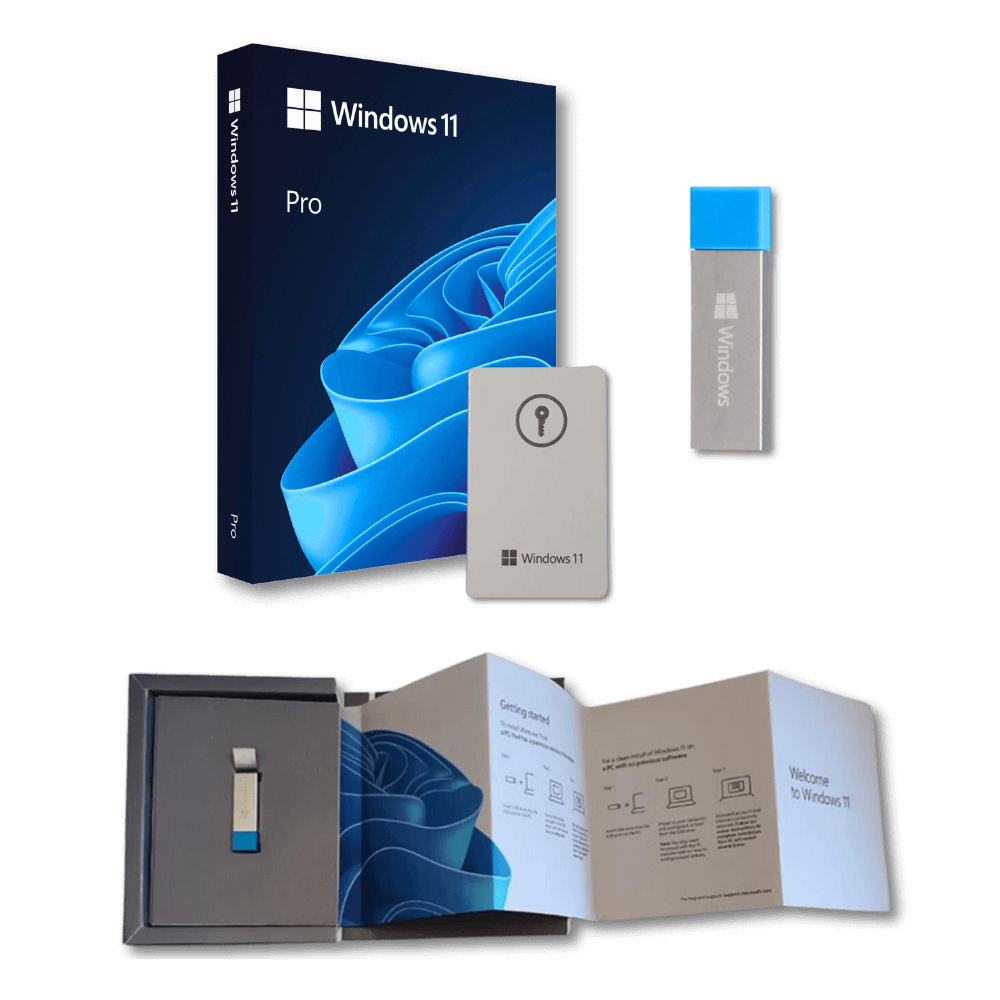
Optional next step if you’re doing a reinstall anyway: If you’re troubleshooting during a fresh setup or after swapping hardware, having the correct genuine Windows license ready can reduce interruptions later (especially if you need to match the right edition).
Windows 11 Professional
Symptoms → likely cause → fix (fast table)
| What you notice | Likely cause | Fastest fix to try |
|---|---|---|
| Win key doesn’t work, mostly in games | Win Lock / Game Mode | Toggle Win Lock or disable Game Mode in keyboard software |
| Win key does nothing anywhere, but other keys work | Remap/disable tool or driver issue | Check remaps (PowerToys/vendor apps), then reinstall keyboard driver |
| Win key opens nothing, taskbar feels “stuck” | Explorer/Start menu frozen | Restart Windows Explorer / StartMenuExperienceHost |
| Win key works, but Win+ shortcuts don’t | Policy/registry disables Win hotkeys | Re-enable Windows key hotkeys (policy/registry) |
| Only your laptop’s Win key fails | Fn layer/keyboard firmware or hardware | Check Fn/lock combos, update vendor software, test external keyboard |
Reason #1: Win Lock / Game Mode is enabled (most common on gaming keyboards)
Many keyboards have a Win Lock feature that intentionally disables the Windows key so you don’t accidentally tab out of games.
How to fix it
- Look for a Win Lock key or icon
- Often labeled “Win”, a lock symbol, or a gamepad icon.
- Try common toggle combos
- Fn + Win (very common)
- Fn + F6 / F9 / F12 (varies by brand/model)
- Check the keyboard’s software
- Logitech G HUB, Razer Synapse, SteelSeries GG, Corsair iCUE, etc. often include a “Game Mode” toggle that disables Win.
How to confirm it worked: Win key opens Start, and Win + R opens Run.
Worth knowing: Some laptops also have “gaming mode” or “hotkey mode” layers that can change key behavior—if this started after pressing Fn shortcuts, that’s a big clue.
Reason #2: The Windows key is remapped or disabled by software
The Win key can be reassigned by:
- PowerToys Keyboard Manager
- Vendor keyboard software (macros/profiles)
- AutoHotkey scripts
- Key remap tools (SharpKeys-like apps)
Fix it step-by-step
- Check PowerToys (quick win)
- Open PowerToys → Keyboard Manager
- Look for a remap of Left Windows oder Right Windows
- Disable the remap or restore defaults
- Check keyboard vendor profiles
- Open your keyboard software
- Look for a “profile” that disables the Windows key or changes it
- Switch to a default profile or disable “Game Mode”
- Check AutoHotkey (if you use it)
- Look for scripts running in the tray
- Temporarily exit AutoHotkey and re-test
- Restart after changes
- Some tools apply remaps only after restart/log out
How to confirm it worked: The physical Win key and the on-screen Win key behave the same (Start opens, Win+ shortcuts work).
If you’re aiming for a clean, stable setup: After undoing remaps, some people prefer to keep their Windows install fully licensed and consistent (especially after hardware changes or reinstall plans). If that’s you, here’s a spot to add your optional licensed-key card.
Windows 11 Professional
Reason #3: Start menu / Windows Explorer is frozen (Win key presses, but nothing happens)
Sometimes the Windows key is fine—the shell isn’t. That looks like “Win key not working,” but it’s really Start/Explorer refusing to open.
Fix 1: Restart Windows Explorer
- Presse Ctrl + Shift + Esc to open Task Manager
- Find Windows Explorer
- Right-click → Restart
Fix 2: Restart Start menu process (Windows 11 especially)
- Task Manager → Details tab
- Find StartMenuExperienceHost.exe (and/or ShellExperienceHost.exe on some systems)
- End task → it should relaunch automatically
Fix 3: Sign out and sign back in
- Quick way to reset shell behavior without full reboot
How to confirm it worked: Taskbar becomes responsive, Start opens instantly, Win+ shortcuts work again.
Reason #4: Windows key shortcuts are disabled by policy/registry (the key may still work)
Important nuance: Some settings disable Windows key hotkeys (Win+R, Win+E, etc.) while the Win key alone may still open Start—or vice versa depending on the setup. This is common on:
- Work/school PCs
- “Debloat”/tweak utilities
- Custom registry tweaks
What to check (safe order)
- Work/school device?
If this is a managed PC, your organization may intentionally disable Win shortcuts. In that case, you may not be able to change it. - Check for “Windows hotkeys disabled” tweaks
- If you’ve used a Windows tweaking app, revert “disable Windows key shortcuts” options.
- (Advanced) Registry/Policy clue
- There’s a known policy/registry approach often labeled like “Disable Windows key hotkeys.”
- If you’re not comfortable editing policies/registry, stop here and use safer fixes first (Reason #1–#3 and #5).
How to confirm it worked: Win+R and Win+E start working again consistently.
If you’re doing a “fresh start” anyway: When troubleshooting goes beyond basic fixes, some users choose a clean reinstall and keep everything legitimate and properly licensed from day one to avoid weird policy/tweak leftovers.
Windows 11 Professional
Reason #5: Keyboard driver or hardware issue (especially if only one keyboard fails)
If the on-screen Windows key works but the physical key doesn’t, you’re usually looking at hardware oder driver.
Step-by-step fixes
- Try a different USB port
- Prefer a direct port on the PC (not a hub)
- Reinstall keyboard driver (safe and quick)
- Öffnen Sie Geräte-Manager
- Expand Keyboards
- Right-click your keyboard device → Uninstall device
- Reboot (Windows reinstalls the driver automatically)
- For laptops: test an external keyboard
- If external works, the laptop keyboard may need service, cleaning, or a firmware/vendor update
- Hardware check
- If the key feels physically different (mushy/stuck) or never registers, it may be worn or blocked by debris.
How to confirm it worked: The key registers in multiple apps, not just one (Start, Run, Explorer).
Decision tree: If this → do that
- If Win key fails only in games/full-screen apps → check Win Lock/Game Mode (Reason #1)
- If Win+shortcuts fail but Win alone opens Start → check hotkey policy/tweaks (Reason #4)
- If Win key does nothing and Start also feels broken → restart Explorer/Start menu (Reason #3)
- If on-screen Win key works but physical doesn’t → remaps/driver/hardware (Reason #2 then #5)
- If a second keyboard works fine → your main keyboard is locked/remapped or has hardware issues (Reason #1/#2/#5)
Common mistakes (what NOT to do)
- Don’t download sketchy “key fixer” tools — many are bundled with junk or worse.
- Don’t jump straight to registry edits unless you’ve tried the safe fixes first.
- Don’t assume it’s Windows activation-related — activation typically doesn’t disable your Win key.
- Don’t forget keyboard profiles — gaming keyboards often switch profiles automatically per game/app.
If you want the simplest safe path: Most people fix this in under 10 minutes by (1) toggling Win Lock, (2) undoing remaps, and (3) restarting Explorer. If you’re also setting up a PC and want to keep everything clean and legitimate from the start, here’s a natural spot for your optional licensed-key card.
Windows 11 Professional
Edge cases & advanced notes (quick but useful)
- Remote Desktop / VMs: Some Win key shortcuts behave differently inside RDP sessions or virtual machines (host may intercept).
- Language/layout quirks: Some compact keyboards map keys differently; confirm you’re testing the actual Win key position.
- Kiosk/locked-down environments: Managed devices may block Start menu or Win shortcuts by design.
- Third-party launchers: Some Start menu replacements can break after updates—test by restarting Explorer or temporarily disabling them.
- Accessibility interactions: Sticky/Filter Keys usually won’t disable the Win key, but they can change how multi-key shortcuts behave—worth checking if shortcuts are the only issue.
Prevention: keep the Windows key working
- Disable automatic “Game Mode” profiles unless you truly need them
- Keep one “default” keyboard profile with no macros/remaps
- Document any tweaks you apply (PowerToys, scripts, registry)
- After big Windows updates, re-check vendor keyboard software settings
- If you share a PC, create separate user profiles to avoid remap conflicts
If you maintain multiple PCs (home + office + family): Having a consistent, properly licensed Windows setup can save time during upgrades or reinstalls—especially when matching editions across machines.
Windows 11 Professional
FAQ
Why does my Windows key not open the Start menu?
Usually Explorer/Start is frozen, the key is locked (Win Lock), or the key is remapped. Restart Explorer and check Win Lock first.
Why does the Windows key work sometimes but not in games?
Many gaming keyboards disable it in Game Mode to prevent accidental alt-tabbing. Turn off Win Lock/Game Mode in keyboard settings.
Win key works, but Win+R and Win+E don’t—why?
That often points to a policy/registry tweak that disables Windows hotkeys rather than the key itself.
How do I test if my keyboard’s Windows key is physically broken?
Try the on-screen keyboard and another physical keyboard. If on-screen works and another keyboard works, your original key/keyboard is likely the issue.
Can PowerToys disable the Windows key?
Yes—Keyboard Manager can remap or disable it. Check for Left/Right Windows key remaps and revert them.
Do I need to reinstall Windows to fix this?
Almost never. Most cases are Win Lock, remaps, or Explorer. Reinstall only if your system has broader problems beyond the Win key.
Is it safe to edit the registry to fix Win key issues?
It can be, but it’s easy to break things. Treat it as an advanced step after trying the safer fixes.
My laptop has no Win Lock key—what now?
Try Fn combos, check vendor utilities, and test with an external keyboard to confirm if it’s keyboard-specific.
Optional (if you want to add a final gentle CTA): If, after troubleshooting, you decide on a clean reinstall or hardware upgrade, it’s convenient to have a legitimate Windows license ready so you can get back to work quickly.
Windows 11 Professional
Schlussfolgerung
If your Windows key isn’t working, it’s usually one of five things: Win Lock/Game Mode, software remaps, Explorer/Start issues, disabled hotkeys via policy/tweaks, or a driver/hardware problem. Start with the quick checklist, apply the fix that matches your symptoms, and confirm the result with Win+R and the Start menu.